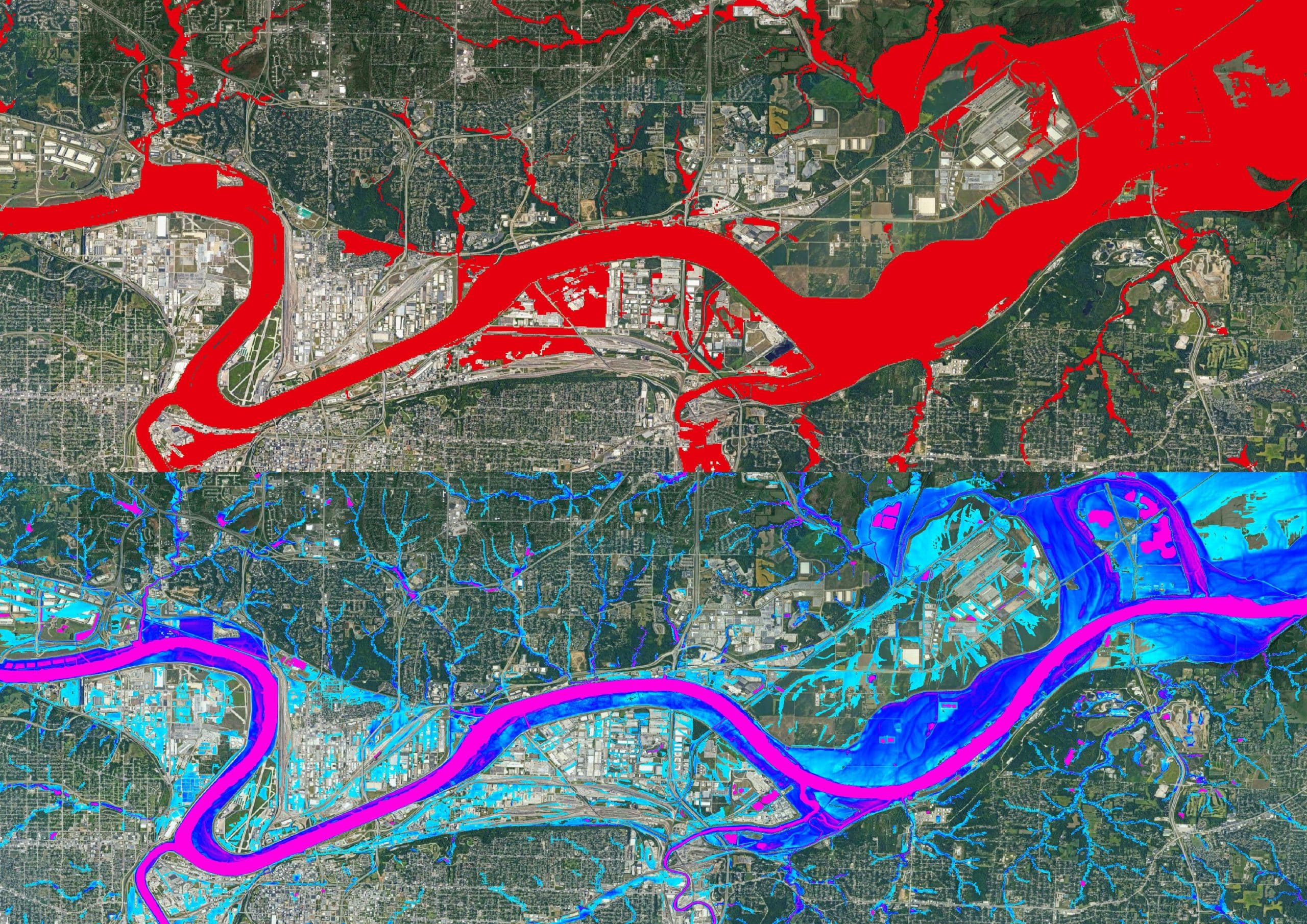
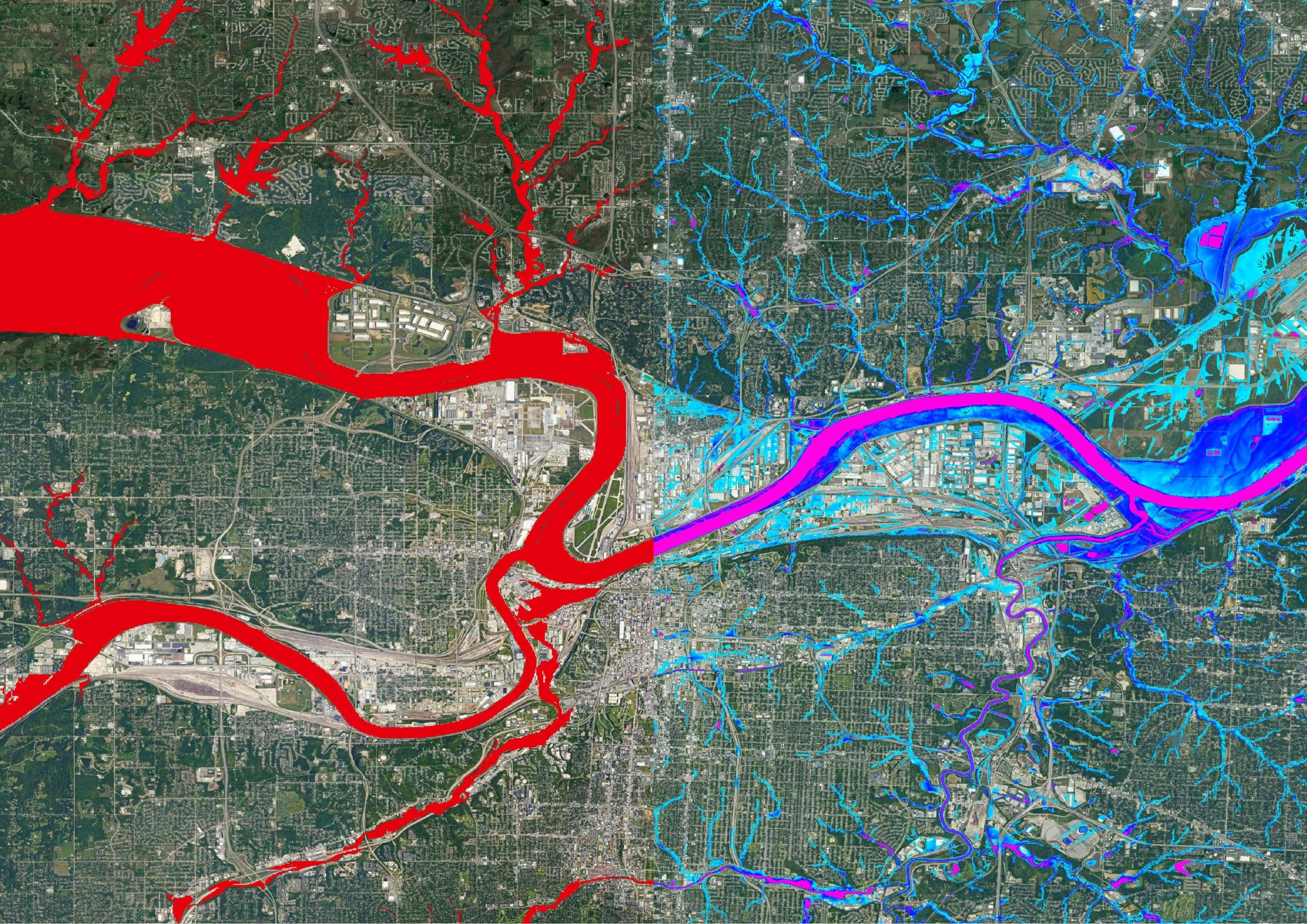
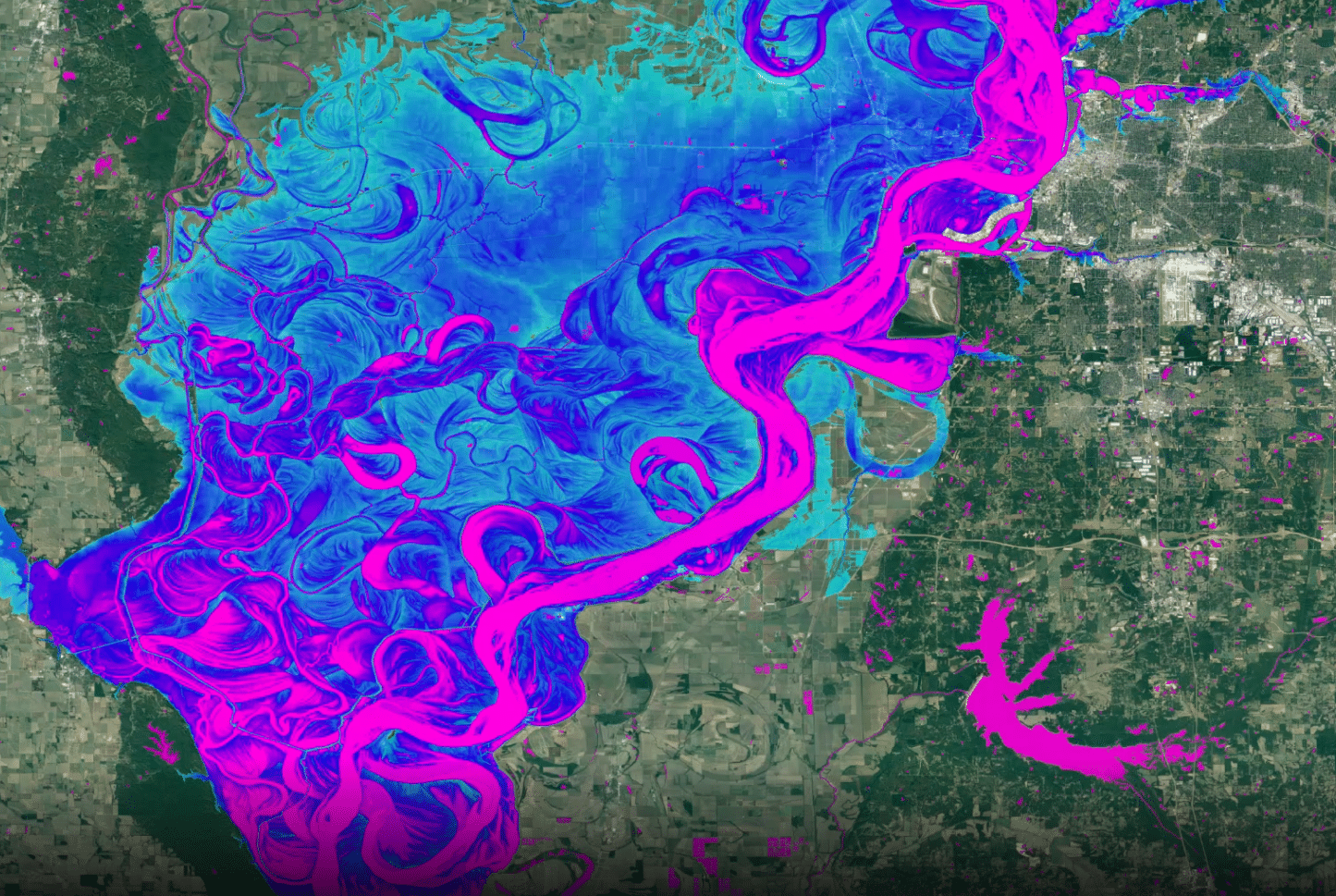
Global flood risk intelligence firm Fathom has unveiled a new US Flood Map, a cutting edge tool that provides the most comprehensive climate-driven flood risk information for the United States.
Responding to the inconsistent and incomplete coverage of existing datasets, the US Flood Map leverages the latest observation, terrain and climate information to present a consistent view of flood risk for all major flood perils, climate scenarios and time horizons. Fathom’s US Flood Map offers the most advanced hazard and risk information for the country, at 10m resolution.
Fathom’s US Flood Map empowers engineers, climatologists, GIS professionals and asset owners and operators to make swifter, more informed decisions for their projects at pace and with confidence, using this comprehensive resource. Offering a uniform view of current and future flood risk in the US, the flood map enables users to enhance risk assessment and climate risk reporting, and future-proof their assets.
Dr. Christopher Sampson, Chief Technical Officer, at Fathom, said: “By integrating Fathom’s advanced methodologies and state-of-the-art data, stakeholders can optimize site selection, incorporate flood mitigation strategies and integrate resilience from the outset.”




ALSO READ: Natural Disaster Preparedness to be Automated in West America
History of extreme weather events in the US
The United States has experienced a significant increase in the severity, frequency and unpredictability of extreme weather events, due to factors such as climate change, natural variability, population growth and urban development. The impact of these catastrophes are immense and, if not mitigated sufficiently, will continue to impact critical infrastructure and put communities at risk.
According to a Climate Central analysis of data from the National Oceanic and Atmospheric Administration, weather disasters that cost more than $1 billion in damage are on the upswing in the US. The duration between two extreme weather events in the US used to 82 days back in 1980’s has shrunk to 18 days in 2018-22.
In 2022, the US witnessed 18 such disasters where the damage cost reached up to the average of $1 billion. Emerging technology now means that we have more information than ever before to effectively manage exposure to flood risk in the US, and prevent unorganized development in high-risk areas.
How Fathom’s methodologies are different from traditional approaches
Traditional approaches to mapping flood risk are highly detailed but not scalable due to resource, time and financial demands. Fathom’s methodologies, independently validated by organizations like USACE (U.S. Army Corps of Engineers) and built upon an array of scientifically robust and peer-reviewed research by Fathom’s scientists, enable efficient and robust flood hazard assessment without compromising accuracy.
Notable features of the US Flood Map include:
Comprehensive coverage: US Flood Map covers every river, stream and coastline in the country, in great detail and accuracy. It offers a consistent and unified view of flood risk across the entire country and 100% of river channels.
Unrivaled terrain data: It provides accurate US terrain data, based on LiDAR data collected since 2020.
Climate conditioned: It demonstrates the impact of climate change on flood risk under all emissions scenarios, temperature changes and time horizons up to the year 2100.
Updated methodology: A revised methodology provides complete flood defense dataset.
Dam simulation: Using a machine learning model trained on all available observations, Fathom has estimated the influence of all 84,000 dams on extreme flows nationwide. In addition, by applying detailed land use and building data to varying surface parameters, the new US Flood Map explicitly simulates how land use impacts the flow of water across the entire country.
Risk Scores: Distilling complex depth-frequency data into an easily digestible and consistent metric of how flood risk varies from one location to another.
A range of mechanisms can be used to access the data, including through a self-service API, on premises and via the Fathom Portal – a user-friendly platform for companies or teams without in-house geospatial capabilities.
ALSO READ: 33 Million Homes in US Coastlines at Significant Hurricane Damage Risks, Says Report