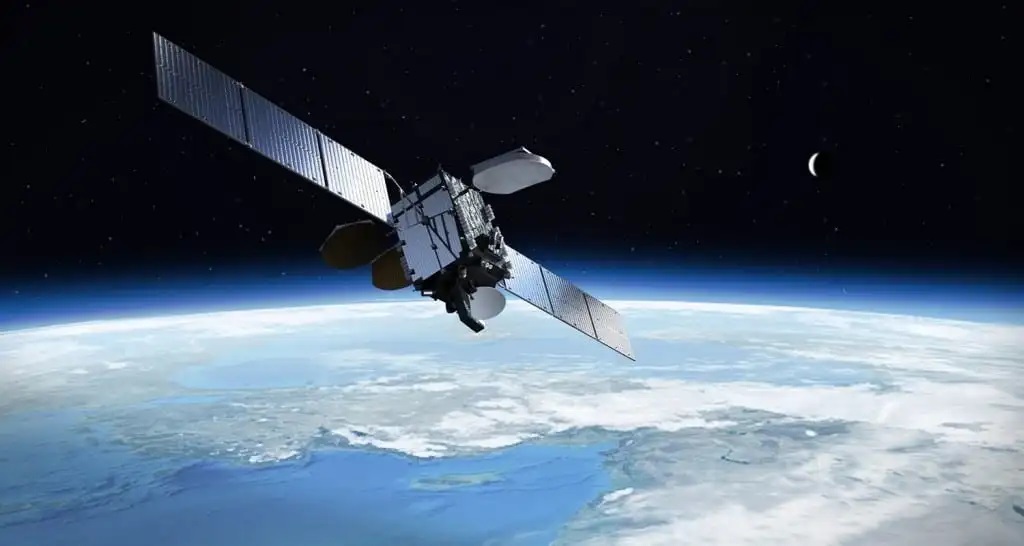
The year 2024 is shaping up to be a vibrant one in space exploration, with numerous major satellite launches already planned and many more likely to be announced throughout the year. Here are some of the most noteworthy launches that have already taken place or are scheduled for the coming months.
January
XPoSat (India)
This pioneering mission by the Indian Space Research Organisation (ISRO) was successfully launched on January 1st, 2024. XPoSat is India’s first dedicated polarimetry mission, equipped to study the polarization of X-rays emitted by celestial objects like black holes and neutron stars.

Peregrine (United States)
This lunar lander developed by Astrobotic Technology is slated for launch on January 8, 2024. As part of NASA’s Commercial Lunar Payload Services (CLPS) program, Peregrine will deliver payloads to the Moon’s surface, supporting scientific research and paving the way for future human missions.

Kuaizhou-1A (China)
The Kuaizhou-1A (KZ-1A) is a Chinese rocket designed for quick-reaction launches. Launching on January 5 the company ExPace is focused on small satellite launchers to low Earth orbit. It is a wholly owned subsidiary of Missilery China Aerospace Science and Industry Corporation (CASIC), a Chinese state-owned company, and serves as its commercial rocket division.
IGS Optical 8 (Japan)
The IGS Optical 8 (Intelligence Gathering Satellite) is a Japanese optical reconnaissance satellite that is being launched on January 11. The satellite is operated by the Cabinet Satellite Information Centre. The satellite serves both Japan’s national defence and civil natural disaster monitoring. Mitsubishi Heavy Industries, through its defence-related activities, it is the world’s 23rd-largest defence contractor measured by 2011 defence revenues and the largest based in Japan.
INSAT-3DS (India)
Launching on January 26, INSAT-3DS is an Indian weather satellite built and operated by ISRO as part of the Indian National Satellite System. It provides meteorological services to India using a 6-channel imager and a 19-channel sounder, as well as search and rescue information and message relay for terrestrial data collection platforms. The satellite will be a follow-up to INSAT-3DR.
February
Nova-C (United States)
This robotic lander built by Intuitive Machines is also scheduled for launch in February 2024 under the CLPS program. Nova-C will carry scientific instruments and technology demonstrations to the lunar surface, contributing to lunar exploration and resource utilization research.

PACE (Plankton, Aerosol, Cloud, Ocean Ecosystem)
Projected to launch on Feb 6th PACE (Plankton, Aerosol, Cloud, ocean Ecosystem) is a NASA Earth observation satellite mission. It will make global ocean colour measurements to provide extended data records on ocean ecology and global biogeochemistry (e.g., carbon cycle) along with polarimetry measurements to provide extended data records on clouds and aerosols. The satellite launched with the Falcon 9 first-stage rocket will land back at the launch site after this flight.
Progress MS Soyuz 2.1a (Russia)
Progress MS-26 (87P) is a resupply mission to the International Space Station. The Russian Federal Space Agency (ROSCOSMOS) is launching the mission on a Soyuz 2.1a rocket from the Baikonur Cosmodrome in the Republic of Kazakhstan on February 15, 2024. The mission is expected to dock with the Zvezda module on February 17.
March
NISAR (India)
Launching likely in early March 2024, this joint mission by India and NASA will be the costliest and largest radar imaging satellite ever built. NISAR will create detailed 3D maps of the Earth’s surface, providing invaluable data for monitoring natural disasters, managing resources, and studying climate change.

GISAT-2 GSLV Mk II (India)
GISAT 2 (GEO Imaging Satellite) is an Indian earth-observing satellite operating from geostationary orbit to facilitate continuous observation of the Indian sub-continent and quick monitoring of natural hazards and disasters.
ViaSat-3 EMEA (USA)
Launching late March by United Launch Alliance the ViaSat-3 is a series of three Ka-band satellites that are expected to provide vastly superior capabilities in terms of service speed and flexibility for a satellite platform. Each ViaSat-3 class satellite is expected to deliver more than 1-Terabit per second of network capacity and to leverage high levels of flexibility to dynamically direct capacity to where customers are located.
WorldView Legion 1 & 2 (USA)
To be launched by Elon Musk’s SpaceX WorldView Legion is a constellation of Earth observation satellites built and operated by Maxar. Constellation is planned to consist of 6 satellites in both polar and mid-inclination orbits, providing 30 cm-class resolution.
April
Polaris Dawn (SpaceX, USA)
This private human spaceflight mission, operated by SpaceX on behalf of Shift4 founder Jared Isaacman, is scheduled for no earlier than April. Isaacman and three others will spend several days in low Earth orbit aboard a Crew Dragon spacecraft. Polaris Dawn marks the first of three planned missions in the Polaris program, aiming to conduct scientific experiments, raise funds for charity, and perform the first commercial spacewalk using SpaceX-designed spacesuits.

Dream Chaser (Sierra Space, USA)
NASA’s Dream Chaser spaceplane, developed by Sierra Space, could see its first flight to the International Space Station in April. Dream Chaser is a reusable cargo and crew vehicle designed to provide alternative transportation options for astronauts and supplies.

GOSAT-GW( Falcon Heavy- SpaceX)
The Geostationary Operational Environmental Satellite-S Series (GOES-S) is the second of the next generation of geostationary weather satellites. The four satellites of the series will provide advanced imaging with increased spatial resolution and faster coverage for more accurate forecasts, real-time mapping of lightning activity, and improved monitoring of solar activity.
GOSAT-GW H-IIA 202 (Japan)
GOSAT-GW (Greenhouse Gases Observing Satellite Greenhouse gases and Water cycle), formerly known as GOSAT 3, is JAXA’s next-generation satellite to monitor greenhouse gases like carbon dioxide in the Earth’s atmosphere. It is the follow-up to the GOSAT 2 (Ibuki 2) and GCOM-W (Shizuku) missions.
May
Chang’e 6 (China)
Marking a significant milestone in lunar exploration, China plans to launch Chang’e 6 in May 2024. This mission aims to collect and return the first lunar samples from the far side of the Moon, offering valuable insights into its geological composition and history.

EarthCARE Falcon 9 Block 5 (SpaceX)
EarthCARE (Earth Cloud Aerosol and Radiation Explorer) is a joint mission of ESA and JAXA. The main goal of the mission is the observation and characterization of clouds and aerosols as well as measuring the reflected solar radiation and the infrared radiation emitted from Earth’s surface and atmosphere.
Ionosfera-M 1 & 2 (ROSCOSMOS)
Ionosfera is a constellation of four ionospheric and magnetospheric research satellites developed by Roscosmos for the project Ionozond. The satellites will operate on circular sun-synchronous orbits (SSO), at an altitude of about 800 km and located in two orbital planes of two satellites each.
June
Ariane 6 (Europe)
Marking a new era in European spaceflight, the maiden flight of the Ariane 6 heavy-lift launcher is scheduled for June 2024. This powerful rocket will boost Europe’s capabilities for launching heavier payloads, catering to the growing demand for satellite constellations and deep-space missions.

RFA One (Rocket Factory Augsburg)
Rocket Factory Augsburg AG (RFA) is a German New Space start-up located in Augsburg. It was founded in 2018 with the mission to build rockets just like cars.

Türksat 6A (SpaceX) (Turkey)
Projected to launch in June by Falcon 9 Block 5 of SpaceX, Türksat 6A is Turkey’s first domestically manufactured geostationary communications satellite. It is to reside in 42° East orbital slot, providing services to customers in Turkey, as well as in Europe, the Northern coast of Africa, the Middle East, India and Indonesia.

Arctic Satellite Broadband Mission (ASBM) (Norway)
Launching in Late June on the Falcon 9 Block 5, ASBM (Arctic Satellite Broadband Mission) 1 & 2 are two twin satellites built by Northrop Grumman for Space Norway, in cooperation with Inmarsat and the Norwegian Ministry of Defence. They are designed to bring mobile broadband coverage in the Arctic for both civilians and the military.
July
Nusantara Lima (Indonesia)
Nusantara Lima is an Indonesian geostationary communications satellite with a capacity of more than 160 Gbps. Launching on Falcon 9 Block 5 by SpaceX.
Thuraya 4-NGS (UAE)
Thuraya 4-NGS is a communication satellite being built by Airbus Defense and Space for the UAE-based Yahsat. Based on the all-electric Airbus Eurostar-Neo Platform, Thuraya 4-NGS will incorporate a large 12-meter L-band antenna and a payload with on-board processing providing advanced routing flexibility of up to 3200 channels with dynamic power allocation over a large number of spot beams.
August
JPSS-4 (NOAA, USA)
Launching this year, JPSS-4 is a polar-orbiting weather satellite that will improve weather forecasting and early warning systems for extreme events like hurricanes and droughts.

Blue Ghost (United States)
This privately funded lunar lander mission led by Blue Origin is expected to launch sometime in 2024. Blue Ghost will focus on demonstrating critical technologies for future lunar exploration, including soft landings, mobility, and resource utilization.

TSIS-2 (NASA) (USA)
Launching at the end of August by the Falcon 9, The Total and Spectral Solar Irradiance Sensor 2 (TSIS-2) is a satellite designed by NASA to measure the Sun’s energy input to Earth. TSIS-2 comprises two instruments, the Total Irradiance Monitor (TIM), and the spectral Irradiance Monitor (SIM). TIM measures total brightness and SIM measures spectral irradiance over a wavelength range that includes 96% of the energy in the solar spectrum.

September
Sentinel-4A (ESA, Europe)
Launching in the third quarter of 2024, Sentinel-4A is an atmospheric monitoring satellite that will track air quality and greenhouse gas concentrations, playing a crucial role in climate change monitoring.

Galileo FOC 27 & 28 (EU, Ariane Space)
September could also see the launches of Galileo FOC 27 and 28, two of the final satellites to complete the European Union’s Galileo global navigation satellite system.
A joint initiative of the European Commission (EC) and the European Space Agency (ESA). Galileo will be Europe’s own global navigation satellite system, providing a highly accurate, guaranteed global positioning service under civilian control.

Proba-3 (PSLV) (ISRO)
PROBA-3 is the third small satellite technology development and demonstration precursor mission within ESA’s GSTP (General Support Technology Program) series. The primary mission objective is to demonstrate the technologies required for the formation flying of multiple spacecraft in the fields of space science, Earth Observation and surveillance.
This involves the in-orbit validation of these new Formation Flying (FF) techniques and technologies through a series of precision FF manoeuvres, including formation acquisition, high-precision pointing, reorientation, maintenance, resizing, rotation and slew.
SpainSat NG I (Spain)
First of two new-generation satellites built by Airbus to provide secure communications to the Spanish government, its allies, and various international organizations.
October
Hera (ESA)
Gearing up to be humanity’s first encounter with a binary asteroid system, Hera, named after the Greek goddess of cosmic unions, blasts off as ESA’s contribution to the AIDA planetary defence mission.
Following NASA’s impactful strike on the smaller asteroid, Hera meticulously analyzes the resulting crater, transforming this grand experiment into a blueprint for safeguarding Earth from future celestial threats.

Europa Clipper Falcon Heavy
Europa Clipper is the first dedicated mission to study Jupiter’s moon Europa. Mission is developed by NASA and comprises of an orbiter spacecraft, which, while in orbit around Jupiter, will perform numerous flybys over Europa. Europa Clipper payload suit included high-resolution cameras and spectrometers for imaging Europa’s surface and thin atmosphere, an ice-penetrating radar to search for subsurface water, and a magnetometer and gravity measurements to measure the moon’s magnetic field and unlock clues about its ocean and deep interior.
November
Artemis 2 (NASA, USA)
This highly anticipated mission, currently aiming for November, is set to send the first female and first person of colour to the lunar surface in the Orion spacecraft aboard the Space Launch System rocket. Artemis II will send a crew of 4 – 3 Americans and 1 Canadian around the moon and return them back to Earth.
The mission will test the core systems of NASA’s Orion spacecraft including the critical life support system, among other systems which could not be tested during Artemis I due to the lack of crew onboard.

VIPER (United States)
Another exciting lunar mission under the CLPS program, VIPER will launch in November 2024. This rover will explore the permanently shadowed regions near the lunar South Pole, searching for water ice and other resources essential for future human presence on the Moon.
December
NZSA Venus Mission
The NZSA Venus Mission is planned to be launched on the penultimate day of the year 2024 from New Zealand. It is a small direct Venus entry probe with a single 1 kg low-mass, low-cost autofluorescing nephelometer riding on a satellite bus based on the Photon Upper stage of the Electron rocket.
The probe mission will spend approximately 5 minutes in the Venus cloud layers, 48-60 km above the surface, collecting in situ measurements to search for organic molecules in cloud particles and constrain particle composition.
These are just a few of the many exciting satellite launches planned for 2024.
As the year unfolds, we can expect more ground-breaking missions and technological advancements that will further our understanding of the universe and push the boundaries of space exploration.