



Dr. S. Somanath, Secretary, Department of Space, and Chairman, Indian Space Research Organisation, shares his thoughts on everything from innovation to sustainability, AI to student support, tech incubation to deep space exploration, human spaceflight to economic potential, and the future roadmap of Indian space sector, in an exclusive interview with Arup Dasgupta, Managing Editor, Geospatial World.
The Indian Space Research Organisation (ISRO) is home to many innovations taking place in all sectors of space technology: applications, spacecraft bus, launchers, and advanced technologies for payloads, exploratory missions, and science missions.
We were able to build High-Throughput spacecrafts in the last few years and put them in place, so that we have the capability to achieve something like 20 Gbps. But that is just not enough. I think the demand is much higher. This is one area where we have to innovate to create spacecraft buses for the future. There is no difficulty in doing so, but the real issue is: who is the user who wants it, and who is going to deploy it and economically exploit it?
We need optical communication links so that we can establish High Throughput and secure communications networks. Here, we started with the small payloads demonstration, but it did not go far. We need to go further in creating very reliable optic communications networks. Inter-satellite communication is another area that needs to be developed. We also have to go into various other bands in the communication domain. We have gone up to Ka; now we are moving to Q and V bands also. These need to be developed and we have to deploy these bands for our regular communication use, including for various other institutional users and for commercial exploitation.
The demand for remote sensing data in various sectors is increasing and people are looking for high resolution imagery. They are also looking for various advanced technologies in other spectra. We have demand for radar imagery for agriculture use and other resources mapping, alongside the demand for continued support for existing satellite observation platforms. This is a conflicting demand. We need to look at how this can be met, because lower resolution demand is also there while we look for a higher resolution solution.
Then there is another demand for geo-based optical observations, and geo-based other spectra observations for various users, including strategic users. The challenge today is not only for resolution but the periodicity or revisit capability, and availability of data in a very short time. These two things demand that we put more platforms in orbit.
Currently, around 20-23 Earth Observation satellites are in orbit but this is just not enough for India. The challenge is who is going to build them and operate them, and how will they get commercially viable. This is a very difficult question. More so because everything cannot be funded by the government, and we cannot put hundreds of Earth Observation satellites into orbit and make all the data available to everyone for free. While everyone may want it for free, but no one is ready to actually build satellites.
We looked at the entire design process to see if an on-demand launcher can be realized in the complex domain of launchers. I think we have been successful in that, although the development has taken a long time; the vehicle is in shape now and we are going to launch it soon. After this, it will go to the industry for production and launch to meet consumer demands.
We are also looking at innovation in reusable launch vehicles; work on this has been going on for some time. We will have a landing demonstration soon, followed by an orbital launching demonstration. A reusable launch vehicle of this class is critical for strategic users rather than commercial users, because we can take a payload up into space and bring it back safely. This is significant.
We are also looking at how future launch vehicles can be built and how to bring down the cost of the launcher. Currently, the launch per kg is typically USD 20,000. We have to bring it down to USD 5,000. This will be possible only by bringing reusability into the rocket. And a reusable rocket will become profitable only if it is used very frequently.
Suppose we were to build a reusable rocket and launch it only once or twice a year ─ that would not be economical at all. In fact, it will be costlier than an expendable launcher. We need to first create the background on which the reusable rocket will be required, work out
the business and launch opportunity, and only then will a reusable rocket become economically viable. This is precisely the challenge we are working on. And once we see market potential, we will work on such a rocket.
We are also working on a number of other technologies within the organization. We have to work on a huge number of satellites technologies, miniaturization of electronics, new material development, additive manufacturing, new chemical processes, new algorithms for autonomous operation of satellites and rockets, and new intelligence systems and rockets so that failure detection isolations can be avoided.
When I was the Director at Vikram Sarabhai Space Centre (VSSC), we worked on 600 new technologies! We are in the business of innovating and improving our existing knowledge.
We are not using artificial intelligence (AI) deeply, because AI and Machine Learning (ML) and data analytic applications are still evolving. They have not entered our work in a big way. But, of course, I can say there are examples of AI usage in our work – image processing, space for data images, object identification and classification. We were able to create 3D images from 2D images using AI technology and various other methods.
There are various AI applications. For example, in a launch vehicle, we look at AI for data analysis, because during every launch we get so much data that nobody can complete the analysis in real-time. So, we are looking at that type of AI there. Defect identification through test data, defect identification missions is one big domain.
We have followed conventions. We are active partners in space debris management teams and inter-agency committees for space debris management.
We made sure that all upper stages will be de-energized. That means if there are pressure runs, it’ll be relieved, propellants will be let out, so that the stage will remain passive, and doesn’t generate secondary debris. We have been following this procedure for many years for all PSLV and other rockets.
We need to ensure that all soon-to-be defunct satellites are moved to the graveyard orbit. We do this systematically. Last month, we moved one of our end-of-life satellites to a graveyard orbit, which is thousands of hundreds of kilometers above the GSO so that it doesn’t come back and create us a debris for at least hundreds of years.
For low earth orbits we have to ensure that the satellites are brought down to a level where it will decay in less than 25 years of time, not in hundreds of years. This we are trying to do whenever a low orbit satellite becomes non-functional. If we have propellant left we can use it to reduce its orbit, so that it will reenter after a few years.
The most important part is we must have observational capability. It requires interagency coordination, and exchange of data between different agencies that have the ability to observe and predict the devolution of debris in orbit.
Owing to the capability we have developed we can predict the conjunction analysis between these debris and share this information with everybody working in the world.
We are also looking at how to create observational capability. Definitely, all these debris should be about 10 centimeter in size, anything less than 10 centimeter is not observable. We have to establish radars and optical ground stations of our own, to observe not only our satellites but other objects in space.
We want to tell you that the demand for satellites is increasing, and thousands of satellites are coming, especially in the low earth orbit. This a potential threat to the entire humanity or space activity. But of course we have no way to regulate it, or control it in any manner. We can only watch it and then be careful about it. But there is a big danger waiting.
There are plenty of such collaborations, but the collaborations are mostly in the science domain, and some in applications domain. For example, NISAR, carries a L and S band Synthetic Aperture Radar which is useful for both India and the USA. It is an experimental one, but has a lot of applications in agriculture and soil monitoring. L band has a specific advantage, and this comes from NASA, while S band is supplied by us.
We are also working with various other agencies. We are currently working with the French agency, CNES, on a mission to look at a satellite called TRISHNA, which can address various science objectives, especially in the agriculture sector, using various spectra, which I will not reveal, because both of us are developing payloads in that domain.
We are working with JAXA on developing a payload, as well as a mission to go to moon. This will be launched using Japan’s launch vehicle, but the spacecraft will be jointly developed by ISRO and Japan. A lander which will land on the moon. This will be after Chandrayaan 3 It will take three, four, five years to develop.
We had an engine technology discussion going on with the Russia. We have so much of support coming from Russia, Europe and America for the Gaganyaan program. We have a specific technological support coming in from US for deep space missions, like Chandrayaan 2 and Aditya L1.
We also look at how we can create facilities for other nations, like ground stations, data dissemination centers, so that it becomes a global facility. We are also looking at how GNSS, we have the NAVIC system, can have cross calibration facilities in other centers, how our data can be used for various other GNSS providers, and then joint operation of these GNSS systems in case of requirement. We are developing multi GNSS chip sets. We have discussion with the various users like Russia and Europe on whatever GNSS they are developing.
We have space technology cells in most of the first layer IITs and also the second layer IITs, which came up later. We are now establishing space technology incubation centers, or joint space technology centers there with funding from ISRO for faculty and labs
Now, we are also going to institutions like the National institutes of Technology, NITs. Then there are private institutions that are ready to create space-based centers within them. We allow them to do that with our scientific support. There is no financial engagement with them, but we try to create an ecosystem if the faculty and students are interested.
Last month we inaugurated Satish Dhawan Space Science Center in Jammu. We invested around INR 12.5 crores and created this facility. We are starting an academic program there for aerospace and other avionics. Some students will learn this and will contribute to our space sector, not for ISRO alone. We are looking at human capital creation for the entire space sector.
We also engage with the young students, through a program, which is already announced. They will have an opportunity to come and train for a short duration within ISRO. We go across the country to conduct exhibitions, and motivate youngsters to take up STEM.
All these projects are linked to some or other activity already ongoing at ISRO. How we identified these projects are they ever connected with our long term vision of each of the centers. Ultimately, once it is developed, it will get fit into either a launch vehicle, or a satellite, or a payload, or a mission. It is connected in some way or another. It is not just an open-ended research. “Okay. I have an interest in some new material, let us explore and understand the material.” Nothing like that. They’re all linked to something.
We have created IN-SPACe, which is going to be a regulator and a promoter. The regulation function is for all those who want to work in space sector,. They will be regulated by whatever application they put up, and license will be given. Like building launch vehicles, operating satellites, having space assets, conducting experiments.
Second role is promoter. Promotion includes industries who are willing to come and start up ecosystems. Already some area at Ahmedabad is built up and is available to set up such an ecosystem. This will be replicated across various places in the country, wherever investment is possible. Investment is possible from private enterprises as well. This is also mandated to IN-SPACe.
New Space India Limited, is going to be the operators of operational systems. For example, if you put a satellite for communication, remote sensing, they will continue to own this assets, and they will operate. Also, they can build launch vehicles or order new satellite for commercial purpose. This activity has already started.
ISRO will be the technology holder. Whatever is required for governmental strategic users will be done by ISRO. They’ll develop new technologies as needed, as found fit to be developed. Private enterprises also can develop technologies. Nobody’s stopping them. ISRO will handhold to create a better space ecosystem in this country. So this is the new mandate.
We have to definitely propose such an idea, because some of the entities have been proposing. They ask, “Yes, we need seed money for handling,”. There are big business houses who are willing to fund these startups. It’s not the funding that is actually limiting, it is idea that has been limiting us. So if there is a good idea, there is always good money available.
The current definition of the human space life program is to send Indian astronauts to space, and bring them back safely. Only one mission is defined. We hope that after the successful accomplishment of this, we’ll have a long-drawn roadmap. It is important that we develop the roadmap. Currently we are not into a long-term definition, like building a space station or every day somebody will go to moon.
The first step is having an ability to take a man to space and bring them back safely. This is called Gaganyaan project. And for that, we have already got funding. Once we are successful in accomplishing it, definitely the next phase of human space flight program could be unveiled at an appropriate time.
I won’t answer it either way in this case, because it is a very strategical, political question, which I cannot answer in the public domain. We did not join ISS because in our assessment, we didn’t find merit in joining it. With respect to Artemis, this decision needs to be taken at an appropriate time.
On the moon treaty we also have signed. To that extent, we are honoring it, but then they are discussing about extraction, mining, setting up a colony.
We are a country who has accomplished a mission to moon. We also have a due claim on the moon. It depends on what our priorities are, and how much funding we will get, what is the national demand on us. These things which we have to discuss in a policy level, political level. It’s not within my purview at this moment to answer.
There’s a humanities department in Indian Institute of Space Science and Technology. I was the director there for a short duration. At that time, I asked the faculty, “Why don’t you do a study on the size of space economy in India, and how we contributed to this?”
Two of the faculty are currently working with a ISRO scientist to come out with a very clear program. National Institute of Advance Studies is also part of it. I believe in another one year or so we will have some report on the contribution of space to national GDP.

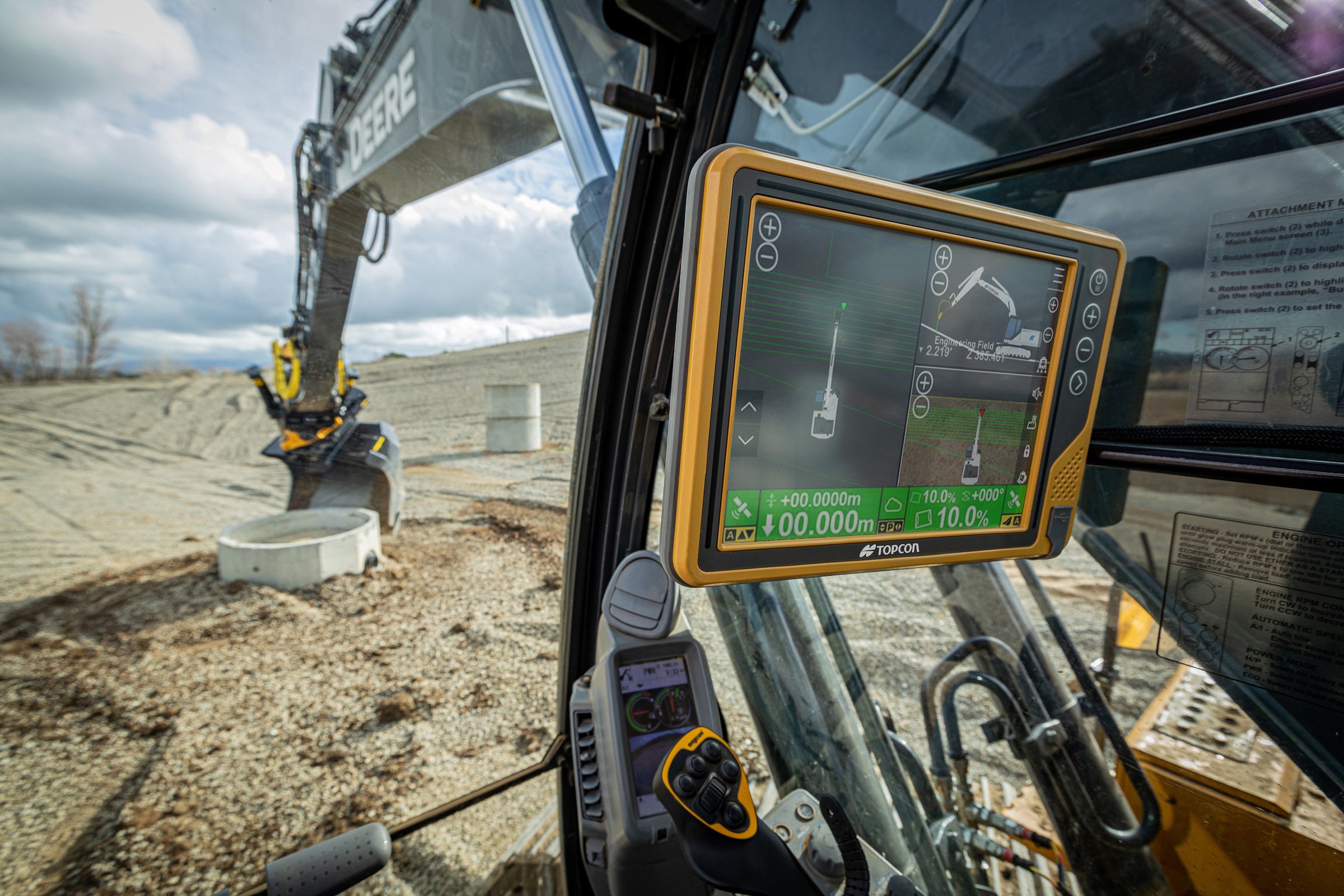
US: Topcon Positioning Group announces advances to its portfolio of machine control solutions that are designed to provide contractors with better performance and profitability in earthmoving applications. The new solutions
Intrinsyc Software International and Movix – a location-based service provider have announced a long-term agreement that provides Movix with access to Intrinsyc’s core navigation assets in source code form. The partnership…