Three European NewSpace companies have partnered to make space traffic management solution based on artificial intelligence (AI). Neuraspace, a Portuguese space traffic management company, Ienai Space, a Spanish in-space mobility company, and EnduroSat, a Bulgarian satellite manufacturer, operator and turnkey provider of space-as-a-service (SPaaS) are going to develop Europe’s first orbital demonstration of a collision avoidance system based on AI.
The plan is to make space-traffic-management a reality, to set a baseline and show the way for the adoption of end-to-end space traffic management solutions.
The mission will serve as a precursor for an end-to-end space traffic management (STM) solution for increased spacecraft safety. The STM will provide spacecraft operators with better space traffic data, collision detection algorithms and more efficient propulsion systems.
Space safety and space sustainability
Global navigation, communication, weather forecasting, climate monitoring, Earth Science as well as space-based applications depend on satellites, which is why to protect the active satellites from collision. Thus spacecraft safety is the need of the hour.
Chiara Manfletti, director at Neuraspace, said: “Space safety and sustainability require urgent and joint action. Improved space traffic management systems are paramount to achieve this. Neuraspace has set out to be a European-born global star in space traffic management. We are happy to have IENAI and EnduroSat as partners to improve in-orbit mobility rather sooner than later.”
Anirudh Sharma, CEO & Co-founder, Digantara, was quoted as saying that the threat of satellite-satellite and satellite-debris collision is an alarming problem, more complicated than satellite operation itself to the space industry today and its complexity is increasing with the growth of the space industry.
Since the inception of space exploration, about 12, 170 satellites have been launched into the earth’s orbit, according to the European Space Agency (ESA), and the number is likely to grow considering all the ‘mega-constellation’ plans are in the pipeline.
Due to the rising number of satellites in the earth’s orbit, there are high chances of them colliding with the space junk that is floating in the orbit like the old satellites, rockets, their parts.
According to ESA, more than 130 million pieces of anthropogenic space debris—waste residue due to human activities—smaller than a millimeter around our planet are floating in the earth’s orbit. The space debris includes old satellites, rocket bodies, and fragments of exploded or decaying spacecraft of varying sizes.
One single collision can lead to chain of collisions, which might affect the active satellites.
What the partnership intends to do?
Ienai and Neuraspace signed a MOU to collaborate on tackling the growing issue of space debris through joint traffic management products. Both companies are looking to reduce the risk of collisions in space by lowering decision times for customers. They will provide operators with more effective decision-making and execution options for collision avoidance manoeuvres for their spacecrafts.
In collaboration with EnduroSat, the companies plan to demonstrate their joint collision avoidance capabilities with a mission in 2023.
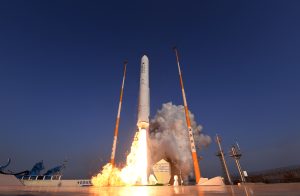
The satellite, built by EnduroSat, will be launched aboard an Isar Aerospace rocket (ISAR 2). Once in orbit, it will be manoeuvred by Ienai’s ‘Athena’ thrusters. The thrusters will respond to both simulated and real collision warnings and manoeuvring suggestions. The warnings and suggestions will be generated by Neuraspace’s AI/ML (machine learning) driven STM solution.
With this mission, EnduroSat also plans to further expand its sustainability capabilities. EnduroSat, and Neuraspace are both early adopters of the Space Sustainability Rating which encourages, recognises, and rewards, space actors who enforce sustainable space missions with a unique rating system.
Daniel Pérez, CEO of Ienai Space, said: “This partnership signals the growing maturity of space companies towards a sustainable use of low Earth orbits. It also recognises an industry need to deliver end-to-end space traffic management solutions to avoid further increase of space debris. It seeks to set an example by and for the industry, and particularly by the European space industry, to demonstrate that space traffic management can and should be a regular feature of commercial space.
“Like IENAI, both EnduroSat and Neuraspace also recognise their responsibility for protecting their own and other operator’s assets and the common space infrastructure. That makes them ideal partners for us. More data, better algorithms and advanced propulsion solutions will contribute to a safer space environment, which is precisely what we are aiming for with our combined service offer.”
Raycho Raychev, founder & CEO of EnduroSat, said: “The EnduroSat team has been working on a vision for a sustainable space program for the past five years. Our latest service offer, sharing capacity among customers on every satellite and reducing the need for multiple single missions, is another step in this direction.
“This new initiative will make space operations safer, and we are proud to be part of it. Our team will support sufficiently advanced programmes for sustainable space, and we hope we can improve the current status of mission operations.”
What others are doing?
In an attempt to monitor space debris, Japan Aerospace Exploration Agency’s (JAXA) with Fujitsu are developing and deploying new analysis systems to calculate orbital courses of space debris.
Indian space startup Digantara Research and Technologies has also signed a contract with Orbital Astronautics Ltd to fly its Space-based Climate and Object Tracker (SCOT) payload onboard an ORB-6 satellite platform.
“With the rapid growth of satellite applications and the influx of mega constellations, situational awareness of 1.0 – 10.0 cm objects, in addition to objects larger than 10 cm, is becoming increasingly important. With 96% of potentially hazardous objects still untracked, comprehensive situational awareness is required to operate assets in LEO effectively. Solving such intricate problems requires real-time insights,” Anirudh Sharma, CEO of Digantara was quoted as saying.
In addition, several space agencies including NASA and ESA, are coming up with projects to collect space debris in the future.