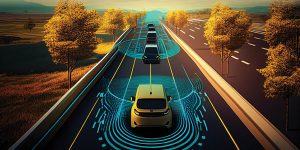
UK government plans to roll out self-driving vehicles on the roads, sparking a transport revolution to improve road safety and better connect communities by 2025. The plan estimates to create 38,000 new jobs from the £42 billion industry and their vision is backed by £100 million to support industry investment and fund research on safety developments.
According to the official statement, some vehicles, including cars, coaches and lorries, with self-driving features could be operating on motorways in the next and there would be new legislation allowing for wider rollout of self-driving vehicles by 2025.
“The benefits of self-driving vehicles have the potential to be huge. Not only can they improve people’s access to education and other vital services, but the industry itself can create tens of thousands of job opportunities throughout the country,” says Transport Secretary Grant Shapps.
“Most importantly, they’re expected to make our roads safer by reducing the dangers of driver error in road collisions. We want the UK to be at the forefront of developing and using this fantastic technology, and that is why we are investing millions in vital research into safety and setting the legislation to ensure we gain the full benefits that this technology promises,” he adds.
Budget allotment
Out of £100 million, £34 million has been allotted for research to support safety developments, which includes researching the performance of self-driving cars in poor weather conditions and how they interact with pedestrians, other vehicles and cyclists and inform more detailed legislation.
Beside £20 million of the total £100 million will be invested to help kick-start commercial self-driving services and enable businesses to grow and create jobs in the UK, following an existing £40 million investment. The remaining £6 million will be used for further market research and to support commercialization of the technology.
Vehicles that can drive themselves on motorways could be available to purchase within the next year, which users would need a valid driving license for, so they can drive on other roads. Other self-driving vehicles, for example used for public transport or delivery, expected on the roads by 2025, would not need anyone on-board with a driving license because they would be able to drive themselves for the whole journey, according to the statement.
“Self-driving vehicles have the potential to revolutionize people’s lives, particularly by helping those who have mobility issues or rely on public transport to access the jobs, local shops and vital services we all depend on,” says Business Secretary Kwasi Kwarteng.
“This funding will help unlock the incredible potential of this industry, attracting investment, developing the UK’s growing self-driving vehicle supply chain, and supporting high-skill jobs as these new means of transport are rolled out,”
AA president, Edmund King, said, “The automotive world is changing rapidly and so the government is right to embrace the positive changes offered by this new technology and back it by funding research and putting forward legislation. Assisted driving systems, for example, autonomous emergency braking and adaptive cruise control, are already helping millions of drivers stay safe on the roads.”
“It is still quite a big leap from assisted driving, where the driver is still in control, to self-driving, where the car takes control. It is important that the government does study how these vehicles would interact with other road users on different roads and changing weather conditions. However the ultimate prize, in terms of saving thousands of lives and improving the mobility of the elderly and the less mobile, is well worth pursuing,” added King.
UK government’s vision
The policy paper released by the UK government on Connected and automated mobility 2025: realizing the benefits of self-driving vehicles reads that the UK government estimates that by 2035, 40% of new cars could be with self-driving capabilities. Starting from grocery deliveries to passenger services, self-driving vehicles are likely to be in operating within the same timeframe.
The potential benefits of connected and self-driving technologies are considerable: from better integrating rural communities and reducing isolation for people with disabilities or older people, to helping deliver essential goods and improving access to education, work and leisure.
Intelligent vehicles will communicate not just with each other, but also with road infrastructure such as traffic lights, helping minimize congestion. These technologies have the potential to make roads safer, reducing the number of collisions involving human error- which is currently one of the major factors in over 80% of collisions that result in personal injury.
New ways of making vehicles safe and testing their safety will ensure the benefits of self-driving technologies become a reality, which is a major focus for the document. This need to embed safety is, in itself, driving innovation: scenario generation techniques have been specifically developed to help us understand how a self-driving vehicle will behave in millions of situations; new sensor technologies, data processing and computational approaches mean vehicles will be capable of perceiving their environments in ways that human drivers will never be able to; and emerging thinking is happening within the field of AI to enable those self-driving systems that use machine learning to explain their driving behavior.