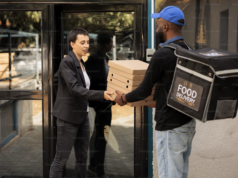
The COVID-19 pandemic has brought about a transformation in purchasing patterns. From ordering essential goods online to opting for home delivery of food, consumers are today choosing safety, convenience, and value, and are more open to switching brands. Buy Online, Pick Up in Store (BOPIS), which was already an emerging trend, has gained momentum in the last one year. According to the COVID-19 Consumer Pulse Surveys by McKinsey & Company, more than 60% of customers have changed their shopping habits.
On the other hand, retailers, who have had to adapt to the changing preferences of consumers, are facing the challenges of bulk orders, last-mile deliveries, store inventory issues, and customer retention. Technology adoption, especially the use of location technology, can help in overcoming these challenges, and ensure seamless in-store pickup and efficient delivery.
Google Maps Platform for seamless business
For the benefit of both consumers and retailers, Google has added new features to its Google Maps platform delivery and pickup guide that can improve the customer journey and retailers’ operational efficiency. The platform’s application programming interface (API), viz., Store Locator Plus, and Checkout, can help customers locate a nearby store and simplify the checkout–a quick hassle-free experience. They get turn-by-turn directions to pick up their purchase, while giving store employees visibility into customer arrival to reduce wait time. Google Maps Platform improves the delivery experience, gives hassle-free checkout, supports drivers, and simplifies the dispatching process. Also, a retailer can minimize delivery errors and provide real-time tracking of the order. Globally, companies are using these features to deliver premium retail experiences.
Also read: How to develop a location-based Augmented Reality app
Locating best store
Through Store Locator Plus, retailers can show a responsive list of locations, sorted by travel distance or time on a customized map. At the same time, a customer can easily view important information, such as services, hours, ratings, and relevant Covid-related operational details. Swisscom, a global telecommunications company in Switzerland, used this API on their site, which bolstered its online appointments by 25x.

Courtesy: Google Maps
Similarly, Argos, a leading retailer in the UK, transformed their brick-and-mortar businesses and developed advanced store locators on their website. The API solution also enables customers to check inventory on the product pages for a convenient shopping experience nearby. The solution led the company to reduce its website’s overall bounce rate by 12% and give it 4 million visitors per year.

Hassle-free checkout through geocoding
While failed deliveries and wrong addresses are a costly affair for retailers, these are also a major cause of customer dissatisfaction. Google Map Platform’s Checkout solution helps retailers and customers validate addresses for accuracy when completing forms for billing.
Checkout has an API, Place Autocomplete that provides a ‘type-ahead’ address prediction service, reducing keystrokes and showing suggestions in real-time. Once an address is obtained from Place Autocomplete, a retailer can also use the Geocoding API to provide quick visual feedback and determine the precise latitude and longitude of the customer’s delivery or pickup address. Tokopedia, an Indonesian marketplace platform, improved its address completion rate by 10% through this.

Courtesy: Google Maps
Also read: A Tale of Smart Cities: How Geospatial Solutions Contribute to Urban Security