

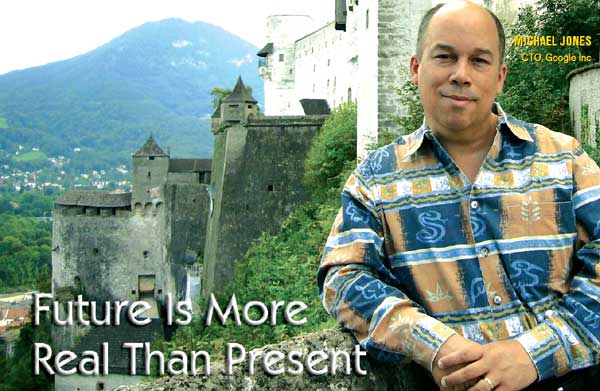
I was adopted. My parents had no children of their own and were older than other parents. All their friends already had children, they were in high school and they didn’t want to play with me because I was not interesting enough. I had no childhood friends. So my only examples were adults. When I was in 4th grade, I decided to learn whatever there was to know about computers. I asked all my parents’ friends for old computer magazines. I read computer books in the library. I learned simple programming when I was 10. I have been programming computers ever since.
By the time I was in 7th grade, I was programming for money, consulting. And when I was in high school, I lived pretty well. I worked part time as a computer programmer and went to college part time. By the time I went to college, other students seemed like children to me. Computer class was intolerable. There was nothing for me to do, so I quit. The head of the computer science department ran a company. I went to work for him. I started on computers by reading. I tried to memorise what I read. As the articles didn’t explain everything, I was forced to guess what things really meant.I was wrong sometimes, often maybe, but I developed a comfort in guessing and understanding parts of how things worked and presuming that later I would understand the rest. And that is something that has never left me. I still feel comfortable while going on a trip knowing only half of the flights, going somewhere and not knowing what I am supposed to do, going to make a speech and not knowing what I am supposed to talk about.
Photography
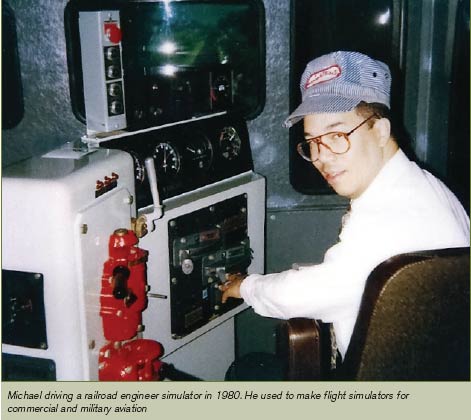
My father worked as a journalist and did some photojournalism. He bought a camera and took a few classes in photography. He would do his exercises and show us what he was doing. I found that fascinating and it was something he and I could share together. He was the professional photographer, but it turned out that I was pretty good at photography too. With digital photography, I have a camera and a dark room in photoshop. I have gotten better and better. I was always passionate about other part of imaging computers more than even photography – real time computer graphics and interacting computer graphics. My interest was not just computers but computer graphics, particularly interactive computer graphics. I was very interested in computers but I also thought of other careers.
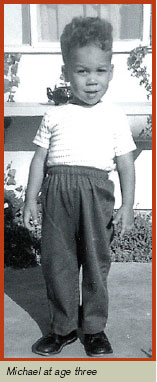 For a long time as a child, before computers, I wanted to be an airline pilot because I thought it was so exciting to see the world. My grandmother would drive me to the airport and I would go and meet the pilots. I talked to them and I found out was that all they do is fly back and forth on the same routes. So I decided that I did not want to be a pilot.
Then I decided to be an architect. I met architects too. But it turned out that most architects remodel houses, they build storage sheds, they build garages, they build economic office buildings. They do not really get to build the biggest temple in city, only a few get to do that. I said I do not want to be an architect either.
So I decided to stick to computers. You do not need a rich client to build a clever algorithm, to build a programme that can do something new and marvelous. It is just your mind and you. I think other things would have been good too like painting or photography. In retrospect, I think I was wrong to have been dissuaded by those pilots and architects, they told me that life was pedestrian. I think I was talking to pedestrian thinking architects and pilots.
Keyhole to Google Earth
Keyhole started by accident. The earliest possible origin of Keyhole actually lies with me. I worked with a company called Silicon Graphics (SGI). One of the companies I worked with had created a program to view satellite imagery where you could zoom in and see the imagery in great detail. It was used in the Bosnia peace talks to draw the border. Talking to these companies I realised that what they were doing was really exciting. In computer graphics they used a system called MIP mapping which made the texture on screen look smooth. I needed to integrate the two applications and I created the CLIP Map – the clip version of the MIP map. We created a demo called Face-to-Face and we showed it in several conferences around the world. You could zoom in and see small details like houses. Everybody loved it. Four years later SGI decided to focus on highend computers and not on graphics. Around 100 of us, who worked on graphics, decided to leave. A friend of mine and I started a company. To start the company we needed money so we approached venture capitalists, and to show that we were smart we needed a demo. We decided to use the Face-to-Face software because we were sure the venture capitalists would like it. That is exactly what happened.
That parent company was called Intrinsic Graphics and I was the CEO of that company. Our company demo was what you now know as Keyhole. My board of directors told me that I was spending too much money on the demo and that it had to stop, but I could not as I liked it so much. I hired John Hinky and took a few engineers from my company and sent them to work on the demo. The improved product was called Earth Viewer. Then we got sued by Vexel. They did not like the name Earth Viewer, as they thought it was too close to one of their product names. So we changed the name to Keyhole after the American satellite programme which is called the Keyhole programme.
During the 2001 meltdown, we sold our product to real estate companies and media companies like CNN and it worked out okay. Then at one time the people who founded Google became our customers. They liked the product. They called us and said that they wanted to buy our company. We did not immediately say yes. We negotiated for six months. We did not care about the money; we cared about our vision. We wanted to know what they would do with it. We also told them that they could not buy the company if they didn’t take all the employees. Finally we sold the company and Google took all the employees.
Google had noticed that some information needs maps not words. It was very clear that Google’s future at some point would include maps with information on it. That is how Google got into mapping. Before they bought Keyhole, they bought a company called ‘Where to,’ then they bought us, and the two of us together built 3D mapping as a platform to view the entire world’s information in context.
The launch of Google Earth was amazing. Journalists were actually not very professional, but personal. They were asking readers to go check this product. I knew then that it was going to make a difference. I am very thankful to Google. They could have just bought us and done something really small with us. Google Earth is a service to the world. I don’t think any other company could have hosted it.
 Vision for the Future
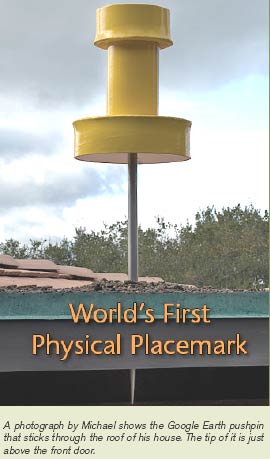
One thing I have realised is that in the future we would not go bigger but smaller. Mobile phones are an important place to use things like Google Earth and Google Maps. The fact is that a majority of the world’s population cannot or does not access Google Earth as they do not have access to a personal computer. But they have cell phones. Right now Google Earth runs pretty well on i-phone, but we are running tests to make it accessible to cheap cell phones too. That is the future and my focus. I am trying to get enough power to generic web browsers – automating the web browsers, scripting add-ons and plug-ins. The future is not a better Google Earth but a smaller Google Earth. I believed in Keyhole before anybody else, even before we ran the test. To me the future is more real then the present.
The new application we are working on is called the Star Finder. It will map all the star locations. It gives the GPS to show where you are, and it shows where exactly you are looking in the sky. Imagine if instead of stars, it could point to a building and tell you which room your third grader is in. Instead of labelling stars we can label shops and buildings and get particular information and pictures regarding that. In the future all you will have to do is point you phone at something and get information about it. That is the immediate future and we are working on that.
Inspiration
Reading science fiction books as a child showed me that there might be worlds out there unlike ours. I also read a lot.
Message to the GIS industry
Do not lose sight of the core values, principles, and techniques of GIS just because web mapping is in vogue. The thing that should be remembered is that the more users products that I am associated with have, the more value the thousands of GIS professionals who actually make these products possible have. The problem with the GIS industry is that if I like ESRI and I like PSI and I want to use them together, it is basically impossible. And that is a mistake. If they all worked together, they would all make more money and provide better service.
The way to design things is to be as open as you can be. That should be the future of GIS – things that are built upon building block that work together.
Conclusion
I am pleased to have done some things and helped do some things that have turned out well. Part of growing up alone is that I had no friends. I have learnt how to like people. It is new for me. I am proud to be likable. If you make your business from imaging the future and make it true, you have to have energy from somewhere. Things are real to me the moment I imagine it.


