
Rising Stars Biography

Melanie Abuel
Executive, Industry X- Intelligent Asset Management, Accenture, PhilippinesMelanie has been a proponent for digitalization of water utilities in key metropolis in Manila and a key technical resource for GIS development across growth areas in Asia. Her asset analytics and programs have been recognized in the Philippines, South East Asia and US during User Conferences. She has also worked in Disaster Response and Mitigation as part of a research group under the Department of Science and Technology in the Philippines that analyzes tectonic movements within Philippine fault zones using GNSS technology.
Today she is working as an Executive of Accenture Intelligent Asset Management under Strategy and Consulting group that aims to further promote GIS as key growth enablers in business through Enterprise Digital Transformation. She is also a new member of Accenture’s Corporate Citizenship program i.e. Missing Maps in collaboration with NGOs working to create maps for humanitarian purposes and emergency response.
Melanie is a member of the Women in Geospatial+, Women in Technology, Women Who Code Manila and UN Women’s International Network in Disaster Response.

Asim Ibrahim Al-Ghamdi
General Manager, Geospatial Information Center, General Authority for Survey and Geospatial Information (GASGI), Saudi ArabiaAt a young age, Asim has served as Secretary-General of United Nations Global Geospatial Information for the Arab States. He also served as Secretary-General on the National Committee for Geospatial Information in Saudi Arabia, where he liaised with all government stakeholders. He was on the Advisory Committee on behalf of the Kingdom for the First World UN World Geospatial Information Congress and an active contributor to the UN IGIF framework in Arab States. Asim has led several delegations to the UN in New York on behalf of the Kingdom.
Asim has led several Multi-Million Riyals Geospatial Transformation projects in Saudi Arabia. His project "Competitive Environments for Products and Services and Licensing of Geospatial" won Victorian and Asia Pacific Spatial Excellence Awards conferred by the Spatial Industry Business Association, Australia. Recently he led the World Bank Project in developing the Economic value of Geospatial Information in Saudi Arabia.

Carline Amsing
Geospatial Advisor, Defence Geographic Agency, Ministry of Defence, The NetherlandsAs a trainee at the Netherlands’ Ministry of Defence, Carline wrote a business case resulting in the establishment of a Human Geography Production Team at the Ministry, which subsequently landed her a permanent position at the Defence Geographic Agency. She is active in the board of Geo Information Netherlands foundation, organizing geo network meetings and promoting the geo profession in the country. She is also active in the FIG Young Surveyors Network.

Christoph Aubrecht
Program Coordinator, Global Development Assistance, European Space Agency, ItalyChristoph manages the European Space Agency’s Global Development Assistance program which in partnership with World Bank and ADB has mobilized more than $100 million from both space and development finance resources dedicated to accelerating impact at scale in development operations.
He is dedicated to Geospatial Impact Science through multi-disciplinary engagement at the interface of science & technology, policy, academia, international development & finance, intergovernmental, public, and commercial service sectors. He has been spearheading global efforts to mainstream satellite Earth Observation and derived analytical geospatial solutions in the international development domain by bringing together space agencies, multilateral development banks, the development assistance donor community, and the geospatial service industry with a focus on the ultimate objective to create sustainable impact and build capacity with those most in need, i.e. stakeholders and people in the developing countries.

Minyoung Back
Research Scientist, SI Analytics, South KoreaMinyoung is one of the rarest female AI developers pioneering the field of SAR (Synthetic Aperture Radar) data analytics in South Korea. She led her company, SI Analytics’ participation in the xView3 2021 challenge hosted by the Defense Innovation Unit under the US Department of Defense to develop AI model that can detect ship vessels without an AIS signal.
With the ever-increasing value of AI-based SAR data analytics, Minyoung continues to develop solutions in various fields such as oil tank retention analysis, flood mapping, and one of the most in-demand tasks, to continuously monitor large areas of the maritime and illegal ships detection.

David Borges
David Borges, NASA Applied Sciences Disasters Program, United StatesDavid is dedicated to solving complex disaster related issues on a global scale through application development and geospatial enablement of Earth observation insights in the context of global policy frameworks, such as the United Nations Office for Disaster Risk Reduction (UNDRR) Sendai Framework for Disaster Risk Reduction. In his role as Co-Chair of the Group on Earth Observations (GEO) Disaster Risk Reduction Working Group, he is leading development of an Earth Observations Risk Toolkit hosted by UNDRR. The Toolkit will bridge the gap between scientific communities, the global geospatial sector and disaster risk management authorities to help lower technical and institutional barriers to using Earth observation information.
David is a Physical Scientist with the NASA Langley Research Center Science Directorate. He serves as Associate Program Manager of the NASA Applied Sciences Disasters Program, managing the Program’s efforts to empower new and diverse communities through the application of Earth science to reduce societal risk in its many forms around the world. He is also a member of the United Nations Committee of Experts on Global Geospatial Information Management (UN-GGIM) Working Group on Geospatial Information and Services for Disasters (WG-GISD) and enjoys supporting the Chesapeake Bay Foundation.

Breylla C. Carvalho
Census Analyst, Brazilian Institute of Geography and Statistics, BrazilAs a census analyst at IBGE, Breylla, along with a geoprocessing team, develops technological tools that enable the preparation of maps to be used in the Census, as well as the assessment of quality of inputs, allowing the collection of important data for the country.
Her work in the geospatial area began in 2009, from an internship in the geoprocessing unit at an environmental company in São Paulo. Since then, she has been working with the use of geo-technological tools to analyze the behavior of coastal and aquatic environments in southeastern Brazil, publishing her results in journals and conferences with an impact in the area. Recently, her doctoral thesis, which deals with the coastal variability of the southern coast of Rio de Janeiro in the face of different oceanographic conditions, was awarded at an important national symposium on geomorphology.
Breylla is also a geo-technology instructor at the Labgis System / UERJ, teaching courses on Geographic Information Systems and Remote Sensing.

Tommy Charles
National Coordinator, OpenStreetMap Sierra Leone, Sierra LeoneTommy is OSM Sierra Leone National Coordinator, a member of the Humanitarian OSM Team’s Community Working Group, and is active with OSM Africa. As National Coordinator, Tommy has led and supported the growth and sustainability of OSM Sierra Leone. He has encouraged the development of a formal leadership structure, inclusion of women, and representation of Sierra Leone at OSM Africa functions. Through the community working group, he has facilitated meetings and helped organize/moderate two public community webinars on data quality and drone mapping.
Tommy is also a YouthMappers Regional Ambassador who has successfully revived, created, and supported several YouthMappers chapters across university chapters in Sierra Leone and Liberia. He is also the leader of the YouthMappers Power Mapping Campaign in Sierra Leone. This campaign is an international collaboration with Arizona State University, YouthMappers, OSM (OpenStreetMap) Sierra Leone, Mapillary, USAID, TeachOSM, and Sierra Leonean energy stakeholders to expand access to reliable electricity in Sierra Leone. He has led field and remote mapping activities in over 20 towns and cities in Sierra Leone to conduct this project.

Suelynn Choy
Professor, RMIT University, AustraliaSuelynn is Professor of Satellite Navigation in RMIT University in Melbourne, Australia. She has served in the role as Interim Associate Dean of Geospatial Science at RMIT University from October 2020 to May 2021, leading and contributing to the advancement of Geospatial Science education, research, and community engagement. Suelynn is also the Director of the RMIT Satellite Positioning for Atmosphere, Climate and Environment (SPACE) Research Centre. The Centre focuses on research and development of precise satellite positioning and navigation solutions, as well as space-based Earth observation approaches for retrieval of atmospheric parameters for weather and climate applications.
Suelynn is acknowledged as an international leader in her research field of satellite positioning and navigation. Her applied research is valued by industry and government, as evidenced by sustainable and high-impact partnerships both in Australia and internationally. In 2017, Suelynn became the first female researcher to receive the Australian National Measurement Institute Prize for her work with robotic tractors and is now laying the groundwork for significant improvements to Australia’s current global satellite navigation systems. She plays a key role in advocating for interoperability of precise satellite positioning services through the United Nations Committee on Global Navigation Satellite Systems.

Ruth Cookman
Head of Policy, Geospatial Commission, United KingdomSince she started at the Geospatial Commission, Ruth has developed and coordinated many of the UK key geospatial policy projects through extensive stakeholder engagement and growing her own geospatial knowledge. She has notably developed and overseen the location data ethics policy work and the publication in December 2021 of a unique (first in the UK and the world) report on the perception of the public on the ethical use of location data. She has also coordinated and published the findings of research on location data opportunities for UK transport and is now shaping opportunities to improve the use of location data in electric vehicle charge point planning.

Hayley Evers-King
Marine Applications Expert, EUMETSAT, GermanyBuilding on a research career using satellite data for marine applications, Hayley works to support scientists, businesses, and governments around the world to solve the many and varied challenges facing our oceans. An expert in ocean color data, she has further developed broad interdisciplinary knowledge across multiple satellite data streams and applied these skills to applications including ocean heat fluxes, climate model validation, coastal water quality and human health, and ocean carbon uptake. She embraces open science principles and seeks innovative ways to communicate and collaborate with others using online learning and co-working tools, open source software, social media, as well as LEGO and the occasional satellite made out of cake!
Currently based at EUMETSAT, Hayley provides technical guidance to users of the Sentinel satellites operated under the European Commission’s Copernicus program. As a member of Women in Aerospace, and through previous work on Athena SWAN and intersectional initiatives for diversity in Earth system science, she seeks to support upcoming geospatial scientists, particularly in Africa and Asia.

Kate C. Fickas
Mendenhall Postdoctoral Fellow, USGS | UC Santa Barbara Climate Hazard Center, United StatesKate is the founder and co-director of the outreach group Ladies of Landsat (LOL) and a new member of the competitively selected USGS Mendenhall Fellowship program at the USGS Earth Resources Observation and Science (EROS) Center and UC Santa Barbara’s Climate Hazard Center. Kate has spent her career increasing accessibility and inclusiveness both through DEI initiatives with LOL and increasing capacity development for communities in need with EO. During the September 2021 Landsat 9 launch, she was instrumental in creating events that showcased underrepresented EO scientists, including a live interview on NASA television and an interview with the Mother of Landsat, Virginia Norwood. In 2022, she is continuing these initiatives to ensure underrepresented EO scientists have space at important Landsat events.
In her scientific career, Kate’s passion lies in wetlands, water resources, and water quality. At USGS EROS and UC Santa Barbara, she uses dense Landsat and MODIS time series, land use and land cover change, and climate data to develop new Landsat science products and aid in water resource forecasting and management. She also works to ensure Landsat’s time series data can be used by environmental managers in the face of the increasing hazards of climate change. This includes building co-development opportunities with US Indigenous communities so that vulnerable populations can use EO to protect their health, homes, and livelihoods.

Mina E. Gerges
GIS/Software Development Team Leader, IT Smart Vision, EgyptFrench Centre for Economic, Judicial, and Social Study and Documentation (CEDEJ) map library is unique in Egypt: A multi-scalar collection of cadastral, topographic, and geographic maps covering all of Egypt ranging from 1/500th to 1/1,000,000th scale. The oldest maps date from the end of the 19th century (insurance map of downtown Cairo) and the most recent ones from the end of the 1990s (the 1/50,000th series covering the Delta and the Nile Valley). These maps are useful to everyone for field studies, integration in master or thesis files or dissertations, comparison at different dates, etc. In order to facilitate the consultation of this map library, Mina has developed a GIS application offering to the community of users an online management catalog, that is ergonomic, dynamic, and interactive and allowing the access, extraction, and exploration of textual and geo-referenced data, all carried out within open-source framework.

Alex Harper
GIS Manager, Central Arkansas Water, United StatesAs the GIS Manager at Central Arkansas Water, Alex provides innovative geospatial solutions to problems the utility faces. He leads two separate teams between Central Arkansas Water and Pulaski Area GIS totaling 11 geospatial professionals. PAgis is a consortium of local governments and municipalities to create and maintain basemap features for the Pulaski County area. These teams created applications for pandemic response both within the utility and to assist in making sure citizens have access to clean drinking water. With Alex’s leadership, CAW’s GIS team has received awards for Excellence and Innovation from the Arkansas GIS User’s Forum. For their work responding to the pandemic crisis, his team also received an honor from AT&T and GovTech for Technology Innovation. Esri also awarded Alex with a Water GIS Hero award in 2020-2021. The University of Arkansas at Monticello honored Alex with the Young Alumni Rising Star Award in 2020.

Pierre E. Jablon
GIS Officer, Glasgow City Council, United KingdomSince joining the Council only a few years ago, Pierre has developed many innovative geospatial data solutions to support multiple initiatives across the council. This includes his current project where he is combining health, police and council data to deliver space-based insight into alcohol and drug deaths and harms in the city. This is ground breaking work as the data has never been combined across agencies before and Pierre has been key in championing a spatial analytics approach. Pierre has also used his work across multiple projects to inspire a greater interest in spatial data which in turn is assisting with renewed investment in infrastructure, tools and training.

Nandhini Karthikeyan
CTO, Numer8, IndiaNandhini has been in IT product development since 2004. At Numer8, she has successfully led a team of GIS scientists, data analysts, and cloud architects to create a globally unique product. Developed for marginalized fishing communities, N8 Ofish has attracted more than 3500 users in Indian fishing communities. This GIS product aims at providing timely data for improving fishermen's revenue and most importantly their safety during their trips.
She has won ESRI GEO-Innovation Award for innovative geospatial products, India, 2019 and the Women in IT Award in the Tech for Good Category, Asia, 2020. She believes her fantastic team is her best asset in delivering a successful product.

Alan Kharsansky
VP Mission Engineering and Satellite Operations, Satellogic, SpainAlan was one of the first ten employees at Satellogic and has been part of almost every innovation of the company. He helped create inexpensive ~40kg EO satellites that produce 1m GSD imagery, now leading the deployment and operation of these satellites in Space. Alan has over 10 years of electronics and systems engineering experience and has worked in educational robotics projects and university research labs before joining Satellogic. He has also taught university courses on embedded systems and space systems engineering.

Viola Kirui
Director and Co-founder, Geospatial Research International, KenyaViola co-founded Geospatial Research International (GRI), a consultancy firm that offers mapping solutions in the fields of water, environment and agriculture. She heads the water and environment unit and has led a number of high impact projects across sub Saharan Africa. She developed an Earth Observation tool called the COLWED, used for the valuation of over 13 ecosystem services from terrestrial lands and wetlands ecosystems with a main aim of showcasing the true value of nature, and in a bid to influence policy with regards to conservation efforts. Recently, over 300 participants from across Africa were trained to use the tool.

Yariwo Kitiyo
Senior GIS Analyst, Proto Energy, KenyaYariwo works as a senior GIS analyst at an FMCG company where she handles supply chain digitization, precise market analysis and streamlining the sales reporting funnel for operational efficiency. She has been previously featured in the Top 30 Under 30 Women Breaking Barriers in STEM by the Mawazo Institute and Einstein Forum for her application of science, technology and innovation for socio-economic development.
Yariwo was part of the COVID-19 National Task Team that created a spatial risk index to understand communities’ unique vulnerabilities and inform planning and resource allocation. The team also created a COVID-19 self-assessment tool in an effort to help slow the outbreak and identify those at risk sooner. The app goes a step further to identify closest health facilities based on risk level.
Her two most exciting projects include the conceptualization of the Gender Situation Room – an end to end location powered solution aimed at strengthening gender data in Kenya and building resilience beyond COVID-19 - and the Pamoja Tunaweza Project where she used GIS to shape local government processes, workflows and engagement with citizens.
She is passionate about diversity, equity and inclusion and has spearheaded impactful projects as the data and innovation lead at Women in GIS Kenya (an initiative she co-founded to build a community of innovators and create a network of talented individuals who can use their geospatial skills to drive change).

Anirudh Koul
AI Scientist, Pinterest | SpaceML, United StatesAnirudh is an AI Scientist at Pinterest by day, and works pro-bono on Earth Observation for climate change. He is the Co-Chair of UN Environment Programme/ITU Focus Group on AI Tools for Natural Disaster Management, conducting the world's largest study on the topic. Anirudh is also a founding member of SpaceML, an AI accelerator for NASA where citizen scientists worldwide build open-source tools to help accelerate understanding of climate science with AI.
Anirudh leads NASA GIBS Worldview Search – an AI system to help scientists quickly identify satellite images related to a particular climate phenomenon or natural disaster from an ultra-large petabyte-scale collection of satellite imagery, using Self-Supervision & Active Learning. This project opens floodgates to research by allowing scientists to curate datasets specific to their topics of interest – acting as an impact multiplier for UN SDG 13. The project won NASA Science Mission Directorate's grant on Groundbreaking Science – top 5 projects among 79 research groups, especially considering the research was conducted by high school students.

Confidence Kpodo
Regional Ambassador, YouthMappers, GhanaConfidence led the first ever virtual mapathon for eight chapters in her country to map Covid-19 hotspots during a lockdown to aid health workers in reaching vulnerable populations in such areas. Her main goal is to introduce student chapters to ways of analyzing geospatial data created in the open web platform of OpenStreetMap through research. Currently as a Regional Ambassador for YouthMappers in the West African sub-region, she offers training, mentorship to students in tertiary institutions on the importance of GIS in a Covid-recovering world today, the benefits of geospatial data and the various ways of such data can be used to address issues.

Iris Kramer
Founder and CEO, ArchAI, United KingdomIris founded ArchAI, which uses AI to automatically detect archaeology on Earth Observation imagery to protect heritage and de-risk construction. She started her career in archeology but recognized a gap in automated methods for the detection of archaeological sites. She took a PhD in computer sciences to investigate automation using the most advanced method out there - Deep Learning, then set up her company and won Geovation Accelerator grant and UK Space Agency funding. With mission to get automation back on the archeological research agenda, ArchAI is now investigating how crowd intelligence can help train AI, explore large areas for hidden archeology and create social impact. The company recently become a part of the ESA Business Incubation Centre United Kingdom. Iris is one of only a few individuals to receive the prestigious Royal Academy of Engineering - Enterprise Fellowship award.

Andrew Lamers
GIS Analyst, Optum, United StatesThroughout his 10 year career, Andrew has worked in the Public and Private sectors as a GIS Technician, Analyst, and Administrator. An active volunteer, Andrew has served on the board of directors for two non-profit organizations, and is currently a committee member with the Minnesota GIS/LIS Consortium. After completing the URISA GIS Leadership Academy in Fall 2020, Andrew served as an instructor at the URISA GIS Leadership Academy in December 2021.

Peter E. Lenz
Vice President of Data Science, Near, United StatesPeter studied geography and urban planning at CUNY's Hunter College, and spent most of his early career being 'that guy who knows GIS' on projects ranging from the rezoning of Greenpoint, Brooklyn to invasive plant management at Yosemite National Park. Peter grew as a data scientist right alongside the place data world, starting by buying and cracking open cell phones to get a look at their GPS chips, moved on to designing petabyte-scale real time custom GIS to store data, and worked to figure out how to actually leverage all that data to learn about the world. Along the way his work was featured from economics journals to ESPN. He even personally advised a major US Presidential Candidate on how to leverage mobile data. In 2017, his work on using mobile data to understand the nature of sports fandom was Quirks' Groundbreaking Research of the Year.

Peter M. Macharia
Postdoc Researcher, Newton Int'l Fellow, Lancaster University, UK & KEMRI Wellcome Trust Research Programme, KenyaPeter is a spatial epidemiologist collaboratively between Lancaster University, UK and KEMRI-Wellcome Trust Research Programme, Kenya under the Royal Society's Newton International Fellowship. He is currently improving geospatial methods of mapping disease prevalence in presence of incomplete spatial information.
Peter has been part of the team that mapped first geocoded pan African database of all public health facilities and made it openly accessible including other epidmiological data. He has published over 28 peer-reviewed articles focusing on disease mapping, geographical accessibility, and vulnerability to aid in reducing health inequities in pathway to attaining UHC and SDG 3 in the most disadvantaged areas. He is dedicated that these outputs are available openly, to policy makers and members of the public through policy briefs, The Conversation Africa, print, broadcast media and invited talks.
Peter is devoted to building capacity and has participated in training MoH staff on using GIS to map immunization coverage and spatial access. Also training malaria control programme staff in some African countries to map malaria prevalence using user friendly web-applications. Peter has mentored students at both primary and secondary schools, university and junior researchers aiming for a health geography career through personal or organized initiatives and forums.

Pooja Mahapatra
Solution Owner - Geospatial, Fugro, The NetherlandsPooja’s passion lies in applying geospatial data to make a meaningful impact on real-world problems. Since 2019, she has worked on commercializing a variety of cutting-edge Fugro innovations, with applications ranging from coastal resilience to railway track maintenance. Through Fugro, she is an active member of the Disaster Resilience Working Group of the WGIC. From 2016 to 2019, she led the global technology deployment efforts in the geospatial domain at Shell, contributing to their digital transformation journey, and resulting in measurable improvements in efficiency and HSSE exposure reduction.
Pooja holds a PhD in satellite remote sensing from TU Delft, on measuring millimetric levels of ground subsidence (InSAR). Her work focused on enhancing the applicability of InSAR and connecting subsidence measurements to other phenomena such as sea-level rise. She authored several peer-reviewed journal publications, gave invited lectures and won awards for the economic potential of her research. She also contributed to many international educational initiatives such as training African scientists on Earth Observation for water management.
With her educational background in space technology, her interests go beyond “geo” – she spent time at the European Space Agency working on prototype Mars rover instruments, testing at Martian analogue sites. She has been an active member of the Netherlands Space Society (NVR) for over a decade.

Marie B. Makuate
Geomatician Researcher, National Institute of Cartography, CameroonMarie is passionate about the environment, climate change, biodiversity loss and how these issues are affecting people. She did her MSc in environmental impact assessment, where she developed a topic to understand how climate change was affecting communities in the East region of Cameroon. She was hired by the National Institute of Cartography Cameroon and later sent by her institution to do Master’s in Geomatics in Nigeria. Since she returned, she has contributed in many projects of the government, including updating the map of the northern part of Cameroon, and assisting the Ministry of Forest and Wildlife in developing a distribution map of protected areas.
Marie also invests her time to mentor young people interested in GIS, serves on panels discussing the future of GIS in Africa, and is the founder of Kids and girls in Geospatial. She is part of geospatial networks such as: African Network of Geomatics professionals, African women in Space and OpenStreetMap communities. She was a part of the organizing committee of AfricaGIS in Ivory Coast in November 2021.

Juliana McMillan-Wilhoit
Network Strategy Analyst, Ahold Delhaize USA Supply Chain Services, United StatesJuliana is passionate about education within the geospatial industry and pushing the boundaries of geospatial technology. Juliana is one of the co-moderators for the weekly “Geospatial Connections” conversation on Twitter Spaces, which is an international conversation about the geospatial industry. Juliana additionally works as a mentor to help geospatial professionals navigate their careers—through her popular LinkedIn content, YouTube, Mappy Hour Networking Events, and one-on-one coaching.
Juliana is also working to push geospatial technology forward. This includes by serving as a Team Lead and Data Manager for the first global geo-design product, called ENSITE. ENSITE is a US Military product to help with site location. Due to her leadership and knowledge of geographic data, the product can be used for any location on Earth.

Flávia de Souza Mendes
Remote Sensing and GIS Analyst, Remote Sensing Solutions GmbH, GermanyFlávia started her career in 2007 at the National Institute for Space Research in Brazil. From this moment on, she has accomplished and impacted the geospatial sector in many ways. She learned and added value in important projects and initiatives in the field of environmental protection and climate change in tropical biomes, mainly in the Amazon and Savanna, such as Soy Moratorium (it is an agreement of non-commercialization of soybean from areas that is involved in deforestation). Nowadays, she is working in the geospatial private sector and her experience lies in managing projects and products in forestry (carbon/REDD+), agriculture and land use change using optical and SAR data.
Flávia is an active member and enthusiast of initiatives such as Ladies of Landsat (Lead Organizer) and Women in Copernicus that work towards a more inclusive and diverse environment in the geospatial sector. Through her large network of contacts, she connects companies and institutions in Europe with local communities in Brazil for greater development, collaboration and inclusion in the geospatial sector. From a humble beginning in Brazil, Flávia is now making a big difference in the geospatial sector in Europe.
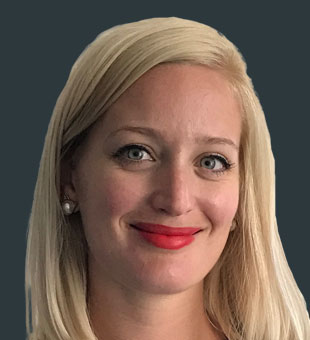
Stephanie Michaud
Strategic Marketing Manager, Trimble Inc., United StatesStephanie is a global mentor who builds relationships across business, academia and geographies for Trimble while leading product initiatives involving disruptive technologies. She has led the development and global marketing of the first Android guidance display and autonomous end-of-row system for precision farming, and holds US/EU patents for three-dimensional elevation modeling. As a sales engineer, she led Trimble’s first Latin American cadastral project with USAID in Colombia. Today she manages the geospatial portfolio of market-leading survey software and external partnerships worldwide.
The youngest participant in Trimble’s Transformational Leadership program, Stephanie forges a path for others through her recruitment and mentoring of students and new hires from around the world, including from her alma mater, the University of Calgary. These activities include supervising new hires for their professional engineering designation, coordinating industry visits to geomatics companies and guest lecturing for geomatics courses and engineering leadership.

Ananyaa Narain
Director - GW Consulting, Geospatial World, IndiaCurrently employed as Director-GW Consulting at Geospatial World, Ananya is an economist by education. She was recognized as a 40U40 geospatial professional for 2020 and continues to break new ground in research and consulting in the geospatial domain. With over 7+ years of experience in the domain, Ananya, through her work, explores the impact of the cross-linkage of technology, economics, and policy using varied qualitative and quantitative tools & frameworks. Her professional expertise includes working with interdisciplinary stakeholders of the geospatial, BIM, artificial intelligence and autonomous, and IT ecosystem – inclusive of global technology corporations and governments. Her areas of focus include geospatial market size and assessment, economic impact evaluation, identifying knowledge gaps, develop policies and strategies, and assessing the value-proposition of geospatial in the global market and economy.
With her forward-thinking mindset, Ananya explores innovative ideas and processes to champion the adoption of geospatial technologies and its integration with cross-disciplinary workflows by working with organizations like European Commission-JRC, UNGGIM-PSN, WFEO, WGIC, and many others. Ananya is actively involved in initiating and contributing to the global technology and policy dialogue through research articles, and field convenings.

Jakub Nowosad
Assistant Professor, Institute of Geoecology and Geoinformation, Adam Mickiewicz University, PolandJakub is a strong proponent and advocate of open-source software and open science in general. Geocomputation with R, the book he co-authored, is currently the primary resource for people wanting to learn geographic data analysis, visualization, and modeling using the R programming language. In addition, Jakub developed several geospatial methods that allow, for example, analysis of areas with similar spatial patterns, evaluation of spatial association between maps, and detection of landscape changes. His ideas are most often accompanied by open-source software with extensive documentation that allows for reproducibility and can be extended by other people. Jakub also generates knowledge about trends in the global landscape changes, applies new ideas on how to predict future changes, and proposes data-driven conservation policies to protect mesoscale tracts of land.

Jean Claude Ntirenganya
Spatial Data Infrastructure Specialist, Land Management and Use Authority, RwandaJean Claude has led the establishment of the Rwanda Spatial Data Infrastructure Hub, a platform for harmonized spatial data collection and dissemination in Rwanda. The hub contains mainly fundamental geospatial datasets from different institutions in Rwanda, and other important GIS products, such as topographic maps and land use plans. He has also coordinated the customization of data visualization tools such as dashboards and interactive maps, to support decision making in different sectors.

Manuel Ntumba
Regional Partnership Manager, United Nations Space Generation Advisory Council, AustriaManuel is among the World's Top Experts, Innovators, and Entrepreneurs, selected from around the globe by US-based XPRIZE FOUNDATION, to propose breakthroughs to overcome the world's biggest challenges. Several of his research publications got featured on Harvard (SAO) – NASA Astrophysics Data System and many other renowned platforms including NewsBreak, a top news platform in the United States.
Manuel recently completed an Executive-level program in Financial Technology from the International Finance Corporation (World Bank Group) and Alipay (Alibaba Group). This gives him more experience in using technologies to support financial inclusion, digital transformation and socio-economic development, especially in developing countries.
Manuel has worked in collaboration with the presidential panel of the African Union of 2021 - 2022 (Democratic Republic of Congo), to develop a roadmap on using space technologies, digital transformation, and geospatial applications to achieve the Agenda 2063 of the African Union (AU). He was selected by the EU's “Erasmus + Sector Skills Alliances” program to join a team of geospatial information experts, which earned him recognition by the “BBC News” as “the hope for Africa in space technologies”.

Phoebe Oduor
Thematic Lead – Land Use Land Cover and GHG Inventories, Regional Center for Mapping of Resources for Development, KenyaPhoebe has led SERVIR-Eastern and Southern Africa Land Cover theme at RCMRD for several years. Thanks to her leadership, co-development of multi-annual land cover maps in multiple countries in the Eastern and Southern Africa region was successfully accomplished. Countries adopted these land cover maps as their own, since they were developed together with their expertise, and used them for their national and international reporting requirements, including but not limited to GHG inventories, Forest Reference Level and more.
Her work has enabled provision of land cover state-of-the-art expertise to national countries in the region. She embodies the mission of SERVIR and RCMRD, and her commitment and dedication have translated to greater Earth Observation and geospatial capacities in Eastern and Southern Africa.
Phoebe is also the point of contact for AfriGEO Secretariat and has played a key role to support downscaling of Group on Earth Observations (GEO) related activities in Africa. Connecting GEO partners and member countries that have mutual interest in utilizing Earth observation for addressing regional and national challenges to meet their development agenda.

Eunice Offei
Senior Land Administration Officer, Lands Commission, GhanaEunice has over 10 years’ experience in property/asset valuation, land management and land governance. She looks beyond the traditional concepts of land administration to really bring an understanding of the role of valuation to a global audience, for example, through the Global Land Programme. She wrote a technical paper on Compliance with Residential Building Standards in the Context of Customary Land Tenure System in Ghana, and was one of the panelists in the Geospatial Knowledge Infrastructure Land Administration summit. Eunice is a member of the Ghana Institution of Surveyors and International Facility Management Association.

Taiwo Ogunwumi
President, Geohazard Risk Mapping Initiative, NigeriaTaiwo has been an innovator in developing solutions to detect, map and solve the issue of flood using geospatial technology. Having discovered the lack of data collection, mapping, and communication of early flood warning maps, Taiwo developed a survey app used to report flooding instances in real-time which is now being used to report areas prone to flooding.
He founded Geohazards Risk Mapping Initiative (GRMI), a first of its kind among youth-led organizations, to promote a sustainable environment through the development, generating applications, and dissemination of Geohazard maps using advanced geospatial technology. At GRMI, he leads a team of twenty-five volunteer youths working collaboratively to create flood prediction statics maps and interactive web maps, used by the National Emergency Management Agency of Nigeria.
GRMI has also hosted a hackathon event that involves fifty-five youths from different countries to digitally map 7500 building footprints.

Heather Porter
Senior Geospatial Analyst, Office for National Statistics, United KingdomHeather is currently Senior Geospatial Analyst at the UK Office for National Statistics (ONS) where she is responsible for undertaking and assisting with geospatial analysis that supports statistical outputs for Census. She leads a team of analysts who work to produce results and improve disaggregation for the UK’s reporting of the Sustainable Development Goals. She is also a key contributor to the UN-GGIM Europe Working Group on Data Integration.
In her spare time, Heather is a key member of the Women in Geospatial+ steering committee, co-leading the mentorship programme, which helps support and develop women and people from under-represented genders across the globe to further their careers.

Uttam Pudasaini
Director, NAXA, Executive Director, Nepal Flying Labs, NepalUttam co-founded a location-based service provider company NAXA with two of his classmates at the age of 23. NAXA is now a team of 60 people and has worked with government, non-government and private sectors in a wide range of geo-data collection, management, and visualization-related projects related to development challenges and disaster management issues across several rural locations in Nepal. Together with international organization WeRobotics, Uttam under the guidance of International experts, co-created Nepal Flying Labs, the first-ever flying labs that focus on localizing robotics particularly drone technology for disaster management and development issues in disaster-prone countries. Flying Labs currently exists in more than 30 countries.
Uttam and his team at NAXA and Flying labs together with both local and international partners have led a number of innovative initiatives contextualizing digital technologies in Nepal. Some of them include the first-ever medical drone project that involves the use of drones to collect sputum samples from rural villages for Tuberculosis diagnosis, development of municipal level Integrated open geodata management platform and linking it with municipal service delivery, development of National Innovation Mapping platform to identify and map innovators all across the country, and official Covid-19 app for the Ministry of Health during the pandemic and many more.

Frank Romo
CEO, RomoGIS, United StatesFrank and his company, RomoGIS, develop solutions to support underserved communities and address racial and social inequities in our environment. He was recently selected as one of 50 leaders from across the country to participate in the inaugural The Memorial Foundation’s Social Justice Fellows Program. Through this fellowship, he works with other fellows to share experiences and best practices for advancing social justice in our communities.
Frank is also a member of URISA’s Vanguard Cabinet and serves as the co-chair of the mentoring committee. Frank worked to develop a new program that pairs emerging geospatial professionals with a mentor to support them. In the last year, this program has supported over 200 participants in over 20 countries, and Frank’s involvement in this program was recently recognized with the 2021 Barbara Hirsch Special Service Award during the URISA GISPro Conference.
Frank also volunteers his time within his own community, organizing events and activities along with other partners and teachers to teach students at the Frederick Douglass Academy for Young Men about GIS and the career opportunities they can pursue.

Jessica Scheick
Research Assistant Professor, University of New Hampshire, United StatesJessica is an accomplished scholar in cryospheric science. Her scholarly research has employed remote sensing (Landsat, ICESat-2) together with machine learning to detect icebergs and characterize changes in calving rates in Greenland Fjords. Her results have shown a measurable change in the distribution of iceberg sizes. These results have implications for understanding the response of ice sheets to our warming climate.
Working with remote sensing data, particularly non-imagery data such as the LIDAR instrument on ICESat-2, is a major technical challenge. Jessica leads the icepyx effort: an open source software library and a community composed of ICESat-2 data producers, users, developers, and the scientific community. icepyx software provides a shared library of resources that simplify the process of querying, obtaining, analyzing, and manipulating ICESat-2 datasets to enable scientific discovery. In addition to her pioneering software development efforts, Jessica is an organizer and leader within the ICESat-2 community, leading regular collaborative development meetings and organizing the ICESat-2 Hackweeks. These efforts have impacted hundreds of scientists.

Roshni R. Sharma
Project Manager & Geospatial Analyst, FrontierSI, AustraliaRoshni dedicates her life to harness Location Intelligence to create tangible positive change for society, creating real traction around sustainability and leveraging tech for good in her role at FrontierSI. As Chair, National Young Professionals and Board member for the Surveying & Spatial Sciences Institute, Roshni has founded a global geospatial mentoring program. This flagship program is creating tangible impacts on intergeneration skills and knowledge exchange for a stronger, more united future of geospatial industry with over 700 participants over four years and growing. As Vice-Lead of the Volunteer Community Surveyor Program for FIG’s Young Surveyor Network, Roshni volunteers to empower young surveyors globally to fill the much-needed gap opening as many surveyors worldwide retire.
Roshni is also devoted to forward-facing solutions for increasing diversity and inclusion in the industry. She is a convener of Australia’s Space, Spatial and Surveying Diversity Leaders Network, working to create a national DE&I benchmarking survey among other initiatives. This aligns with her work on the NSW Government’s Board of Surveying & Spatial Information and her work as a Homeward Bound alumni. Roshni hosts two podcasts (Locate and Discomfort Zone) to spread leadership and love of geospatial worldwide.

Ayeisha Sheldon
Geospatial Analyst, UNOSAT-UNITAR, SwitzerlandAyeisha started her international professional career at just 21 years old, when she interned and worked at the Asian Institute of Technology. Since graduating her bachelors in 2016, Ayeisha has been a part of the geospatial community across the world; Australia (where she grew up and studied), Thailand (2017 - 2019) and currently in Switzerland. She is passionate about geospatial technologies and using these to close gaps within society, contributing to development efforts. She has leveraged her technical and personable skills to contribute to sustainable and humanitarian development and has worked at two United Nations agencies (ESCAP and UNOSAT).
Ayeisha is very active within the geospatial community online, especially the Women in Geospatial+ Network, as well as her own social media accounts. She is an ambassador for the WIG+ Oceania region where she organizes online events and actively engages with young women.

Mayank Singh
Chief Digital Officer, Domino's Pizza Indonesia, IndonesiaMayank Singh is a Visionary multifaceted Digital Business Leader with over 15 years of developing and delivering forward-thinking and disruptive product/marketing strategies, business development and operational planning in Southeast-Asia and India. Globally-minded leader, expert technologist and chief-customer advocate who identifies market requirements and drives to scale and foster growth.
He established India’s first Hyperlocal on-demand Digital Commerce ecosystem at Domino’s India, chaired the cross functional team to grow the Digital business that turned into biggest food tech platform. He has defined 3D and 3E framework for data utilization and location intelligence to drive sales for retail organizations.
An avid Speaker and advisory board member at multiple conferences organized globally on topics such as Future of Digital, eCommerce, Omni-Channel Retail, Voice Bots, Content Marketing, Location Intelligence, Marketing, Retail Tech & Innovation, Leadership, sustainability, etc.

Suyash Singh
Co-Founder & CEO, GalaxEye Space, IndiaSuyash is the co-founder and CEO at GalaxEye Space, a space technology company building a constellation of Edge computing-based Earth imaging satellites. He was previously the founder of Team Avishkar Hyperloop, the team that built India's first ever self-propelled hyperloop pod prototype. At Team Avishkar Hyperloop, Suyash spearheaded the team to become the only Asian finalists and one among top 21 out of 2500 global applicants at the SpaceX competition. Suyash holds 6+ years of Industry experience in Deep Learning & Big Data Analytics.
His ambition is to impact the SpaceTech industry in a way that sustains, facilitates innovative technologies and becoming a pioneer in the industry, with a larger vision to build an inter-planetary infrastructure to enable expansion of Human Civilization and nurture scientific developments from and in space.

Rajan Srivastava
CEO, Heliware, IndiaRight after graduating from college, Rajan started a Drone-based training and service startup, where he realized clients are facing a major challenge to work on large amount of data coming from drones and other sensors. To solve this, Rajan started Heliware, India’s first end-to-end indigenous 3D Geospatial Stack, which provides various data visualization and analysis library that helps users to render terra byte of data in just a few clicks. The platform is currently being used by tens of thousands of developers around the globe and leading EPC companies in India, including NTPC, LNT, Kalpaturu, Renew Power, Azure, and others.

Gabriella Wiersma
Advisor Geospatial Standards, Geonovum, The NetherlandsGabriella started as an intern at Geonovum, where she worked on encoding CityGML/IMGeo as linked data. She graduated cum laude at the Delft Technical University, with a thesis focusing on the investigation of semantic harmonization between Dutch geo-registries – an ambitious topic she is now continuing to work on. She has become one of the driving forces behind the continued innovation of the Dutch SDI, with her excellent and rapid grasp of technical topics such as API standards, linked data and semantic web, lighter encoding formats and the combination of all those into a new SDI framework. Besides her work on Dutch standards for the SDI, she has also participated and is continuing to do so, in several international working groups such as the OGC GeoSPARQL SWG and the OGC Features and Geometries JSON SWG.

Lauren Williams
GISc Professional, Department of Forestry, Fisheries and the Environment, South AfricaLauren is an active member of the Geospatial community in South Africa, currently serving as a member of the Committee for Spatial Information’s Data Subcommittee and was a council member of the Western Cape (WC) Branch of the Geo-Information Society of South Africa (GISSA) from 2013 - 2021. She served as the GISSA WC Chairperson in 2020 and 2021.
Her current role as a GISc Professional at the Department of Forestry, Fisheries and the Environment focuses on the development of online tools, geospatial models and data to assist coastal/disaster management practitioners to better prepare and plan for coastal hazards (primarily inundation). In this context, she is also actively involved in coastal disaster management and climate change projects, both of which were focal points of her PhD research, which she completed in 2020 at Stellenbosch University.
Lauren is one of the core team members responsible for South Africa’s Oceans and Coastal Information Management System (OCIMS), which makes data and information available to stakeholders and the general public, primarily in the form of interactive online mapping tools. More recently, she developed an online reporting tool and mobile application to respond to an Avian Influenza outbreak affecting seabirds, which was deployed to multiple entities. In the international context, Lauren participates in various Benguela Current Convention and Western Indian Ocean engagements.

Tianren Yang
Assistant Professor, The University of Hong Kong, Hong Kong S.A.R.Tianren leads the research team at the University of Hong Kong that aims to develop geospatial analytics and urban modeling to decipher how city regions evolve in terms of land development, human activity, and social welfare. He proposed a complementary use of conventional statistics, online open data, and proprietary location-based services to enable decades-long evaluations of human-city interactions in rapidly urbanizing cities. He further employed causal inference and integrated policy perspectives to predict and maximize economic, environmental, and social benefits through the spatial coordination of various urban developments.
Apart from engaging with the academic community, Tianren consults widely in the real estate and city development industry, where he endeavors to apply research insights to practical decision-making. He has taken part in the development of geospatial models for several dominant city regions in the United Kingdom (Greater London and Cambridge), the United States (Chicago Metropolitan Area), and China (Greater Shanghai). Tianren has recently been included on the 2021 Forbes 30 Under 30 China list for Science and Healthcare. This honor is in recognition of his innovative research and predictive modeling practices undertaken to ensure a sustainable, equitable, and prosperous future for megacity regions.

Fan Zhang
Senior Research Associate, MIT Senseable City Lab, United StatesFan leads the team of the Urban Visual AI at the MIT Senseable City Lab. His work focuses on using geospatial big data to perceive the built environment and measure its association with human perception, human dynamics, and socioeconomics. He co-founded CitoryTech, which is deeply involved in artificial intelligence and geo-information verticals.
While working at the United Nations Economic and Social Commission for Asia and the Pacific (UN-ESCAP) in 2013, Fan was dedicated to using geospatial technology to support disaster reduction in developing countries in the Asia-Pacific region. With more than 8 years' experience in GIS, data science, deep learning, and computer vision, he has conducted various research projects in decision support for smart and sustainable city applications, public policy-making, and government consulting. He was recognized with the Global Young Scientist Award in Frontier Science and Technology, from the World Geospatial Developers Conference (WGDC2020).